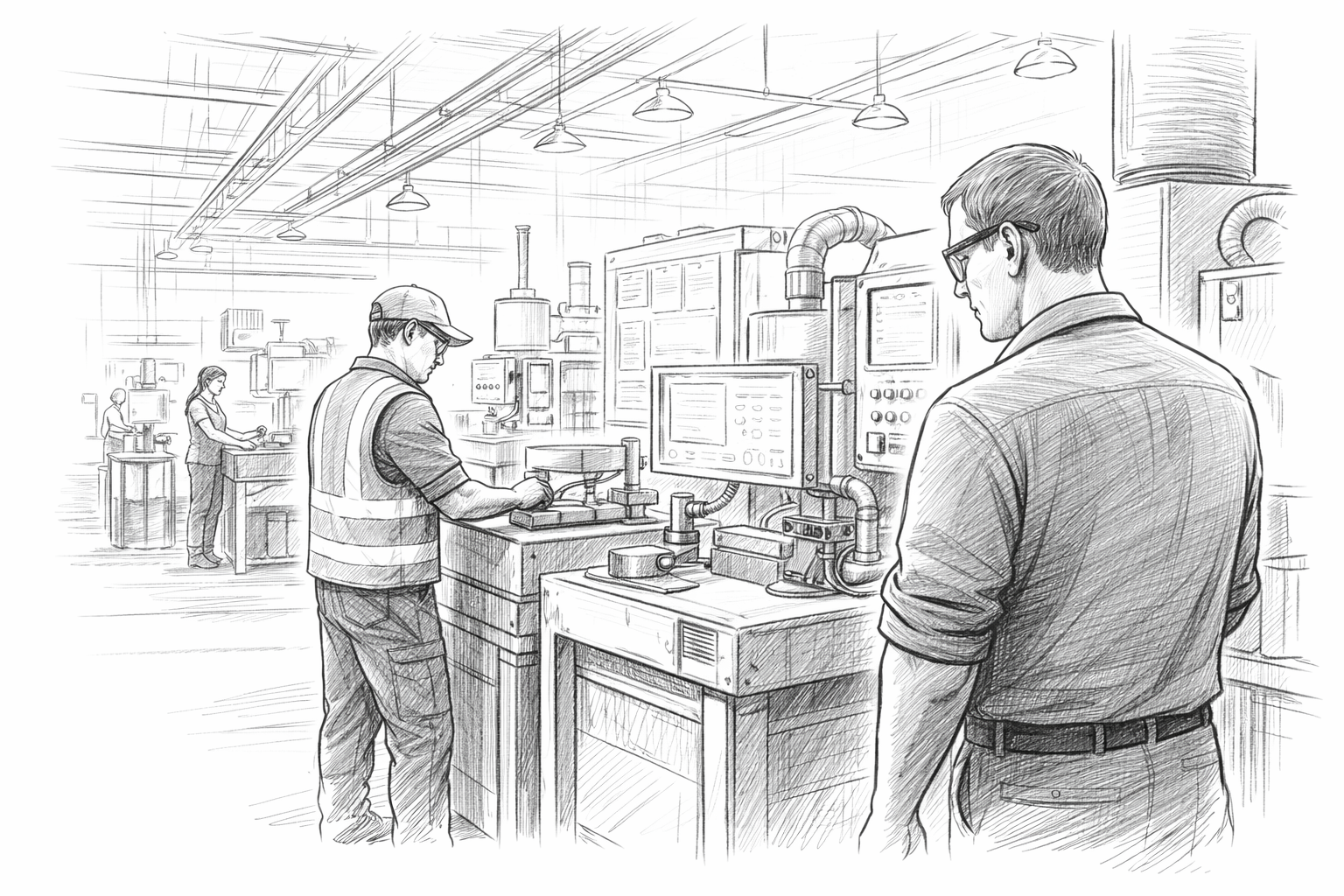
The Most Underrated Tool in Manufacturing Leadership
Let me ask you something.
How often do we try to solve production, maintenance, or safety problems from a meeting room… using reports, dashboards, and PowerPoint slides?
Now another question:
Where do those problems actually live?Exactly, on the shop floor.That’s where Gemba comes in. Not as a buzzword. Not as a ‘walk’. But as one of the most effective leadership and continuous improvement habits you can build in manufacturing.
Let’s break it down in plain language.
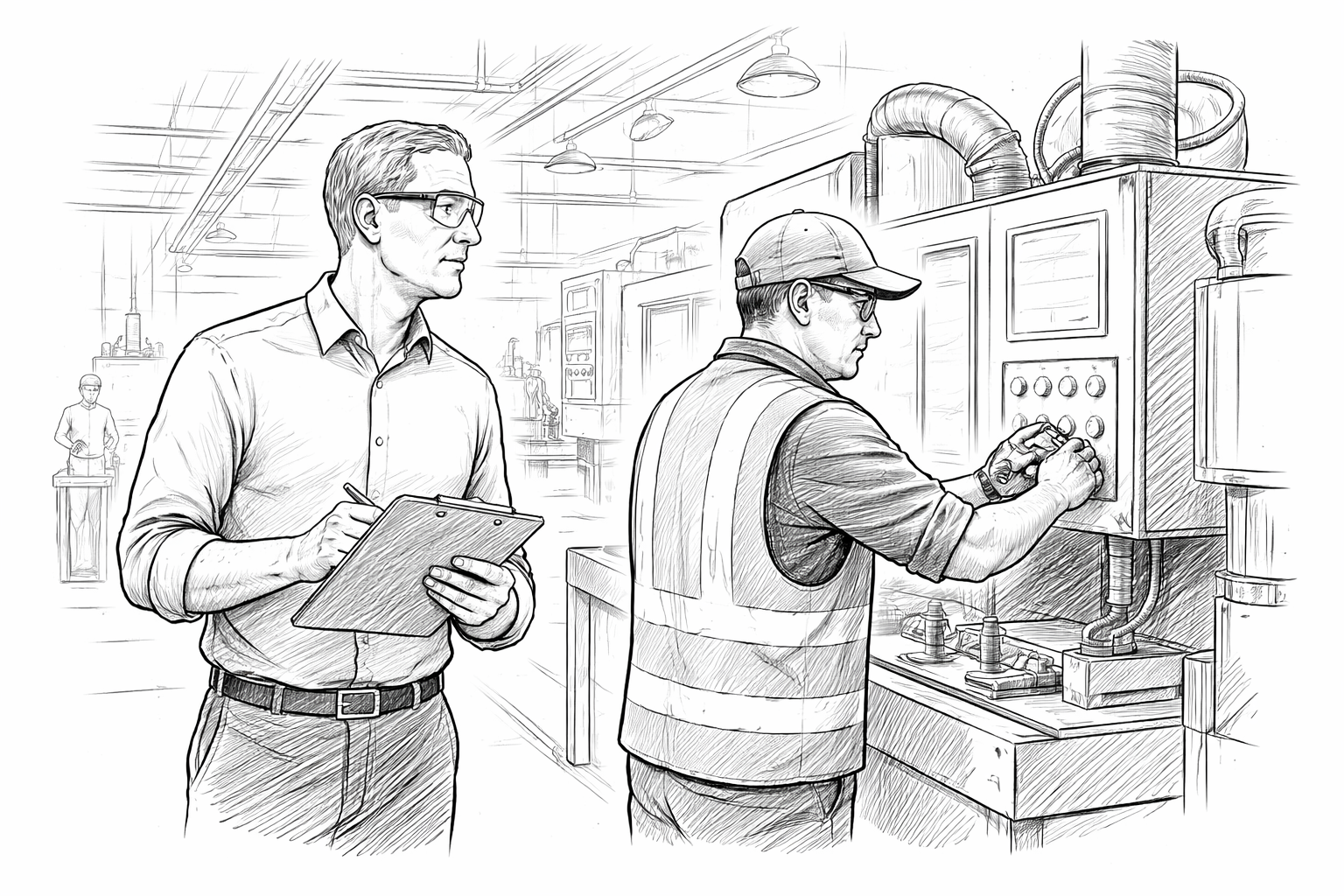
Oceanic Gemba Is Not a Walk. It’s a Way of Leading.
The word Gemba simply means ‘the actual place;. In manufacturing, that’s the shop floor, where value is created and where problems show up first.
But here’s the part that often gets misunderstood:
Gemba isn’t about walking around and ‘checking on people’.
It’s about going to see the work as it really happens, listening without judgment, and understanding the gap between how we think work is done and how it actually gets done on a Tuesday afternoon when things don’t go as planned.
When leaders treat Gemba as a box to tick, people shut down.
When leaders treat Gemba as a chance to learn, people open up.
Why Gemba Changes the Game in Manufacturing and Maintenance
Screens and reports tell you what happened.
Gemba shows you why.
On the floor, you notice things that never make it into a dashboard: equipment that technically runs, but struggles, safety risks that have become ‘normal’, maintenance tasks done differently on every shift, operators compensating for poor design or missing standards.
These aren’t big, dramatic failures. They’re small, quiet signals. And those signals are exactly what Gemba helps you see early, before they turn into downtime, defects, or incidents.
That’s why Gemba is so powerful for reliability, TPM, and continuous improvement. It catches problems while they’re still manageable.
What Good Gemba Actually Looks Like
Good Gemba feels calm. Curious. Respectful.
You show up without pretending you already have the answers. You watch the process run. You ask people to explain what they do and what makes their job harder than it should be.
The questions matter more than the checklist.
Instead of asking, ‘Why isn’t this being done correctly?’
You ask, ‘What usually gets in the way here?’
Instead of pointing out deviations,
you ask, ‘Is this running the way it’s supposed to today?’
That shift in tone changes everything. Suddenly, Gemba becomes a conversation instead of an inspection.
The Real Value of Gemba: Finding the Gaps
Almost every improvement opportunity lives in a gap.
The gap between standard work and reality.
The gap between how equipment should look and how it actually looks.
The gap between what leadership expects and what teams can realistically execute.
Gemba makes those gaps visible.
And once you see them clearly, improvement stops being theoretical. It becomes practical, focused, and grounded in real work.
How to Do Gemba Without Turning It Into Theater
Here’s the part many leaders struggle with: doing Gemba in a way that actually leads to change.
You don’t need a perfect plan. You do need consistency.
Start with a clear purpose. Are you there for safety? Maintenance? Process confirmation? Coaching? If you’re not sure, the team won’t be either.
When you’re on the floor, observe first. Let the process speak. Most of the time, it will tell you exactly where the problems are.
Ask open questions. Not to test people, but to learn from them. The best insights almost always come from the person doing the job every day.
And then, this is critical, close the loop. If issues are raised and nothing happens, Gemba quickly becomes performative. Follow-up is what turns trust into momentum.
Different Gemba, Same Mindset
Not every Gemba looks the same.
Sometimes the focus is safety. Sometimes it’s quality, maintenance, or reliability. Sometimes it’s about supporting frontline leaders and understanding how daily management really works.
The focus may change, but the mindset doesn’t: go see, listen carefully, respect the people, and remove barriers.
The Mistakes That Kill Gemba (Fast)
If Gemba isn’t working, it’s usually for one of these reasons:
It feels like an audit.
Nothing happens after issues are raised.
Leaders only show up when something goes wrong.
The walk turns into a mobile meeting.
When that happens, people stop talking, and once that happens, Gemba is just motion without value.
Why Organizations That Stick With Gemba Win
When Gemba becomes a habit, not an event, things start to shift.
Processes stabilize.
Equipment becomes more reliable.
Safety improves.
People speak up sooner.
Problems get smaller instead of bigger.
Most importantly, leadership decisions get better, because they’re based on reality, not assumptions.
One Last Thought
Gemba isn’t about being everywhere.
It’s about being present where it matters.
When leaders consistently show up on the floor with curiosity and respect, continuous improvement stops being a program and starts becoming part of the culture.
And that’s when real operational excellence begins.