In the first post, we talked about Gemba, going to the floor and seeing reality.
In the second, we talked about Hoshin Kanri, choosing what really matters and staying focused.
Now comes the hard part.
Once you see the problems and set the direction, someone still has to do the work.
And this is where many maintenance organizations quietly break down.
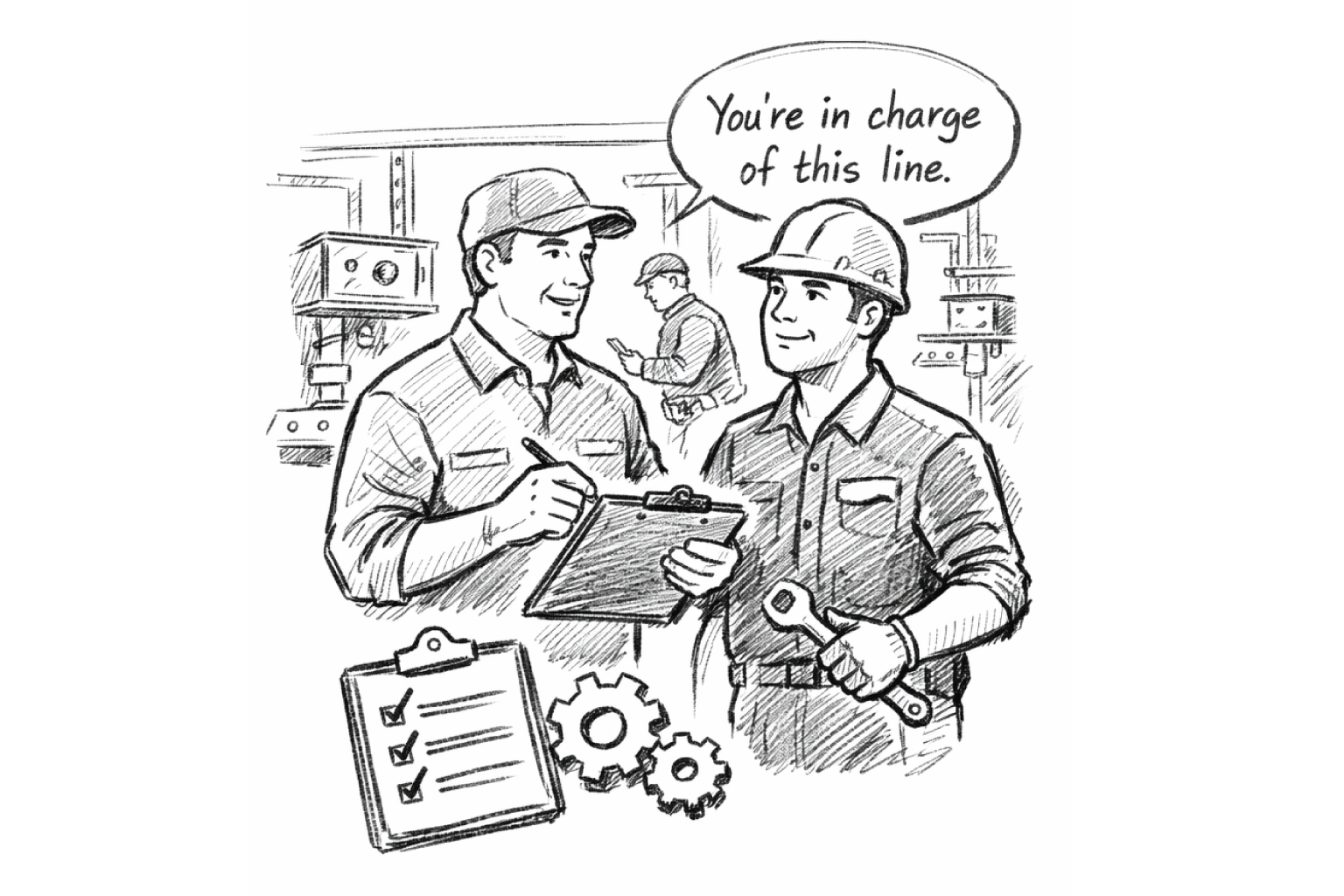
When Everything Depends on One Person
Food plant maintenance managers often become the bottleneck without realizing it.
They approve every decision.
They get pulled into every issue.
They carry the risk, the pressure, and the responsibility.
It usually starts with good intentions, food safety, compliance, uptime. The stakes are high, so leaders stay close. Very close.
But over time, this creates a familiar pattern:
the manager is overloaded, technicians are underutilized, and the department stays reactive no matter how strong the plan looks on paper.
This is exactly why delegation isn’t optional in food plant maintenance. It’s a strategic requirement.
Delegation Is Not ‘Handing Work Off’
In maintenance, delegation is often misunderstood.
It’s not dumping tasks.
It’s not losing control.
And it’s definitely not lowering standards.
Real delegation is about placing responsibility where the work actually happens, while keeping alignment, visibility, and accountability intact.
When done well, delegation shifts a maintenance team from ‘waiting for direction’ to owning outcomes.
Why Delegation Matters More in Food Plants
Food manufacturing adds pressure that other industries don’t always feel as intensely.
Regulatory requirements leave no room for shortcuts.
Downtime impacts production schedules immediately.
Reactive work can quickly spiral if preventive maintenance slips.
In that environment, leaders can’t afford to be the only decision-makers. Delegation creates capacity, not just in time, but in thinking.
It allows managers to step back from daily firefighting and focus on planning, risk reduction, and improvement. At the same time, it builds technical depth and confidence within the team.
What Changes When Delegation Starts Working
When maintenance leaders delegate with intention, a few things begin to shift.
Technicians develop deeper expertise because they’re responsible for specific equipment or areas.
Preventive work gets done more consistently because ownership is clear.
Small issues get addressed earlier instead of escalating.
Perhaps most importantly, people start to care differently. Ownership creates pride, and pride shows up in the details.
This is where reliability improves, not through heroics, but through consistency.
Delegation That Supports Gemba and Hoshin Kanri
Delegation doesn’t stand on its own. It completes the system.
Gemba tells you where the problems are.
Hoshin Kanri tells you which ones matter most.
Delegation determines whether anything actually changes.
Without delegation, Gemba insights pile up and Hoshin priorities stall. With it, improvement work moves forward without everything flowing through one person.
What Smart Delegation Looks Like in Maintenance
Effective delegation in food plants tends to follow a few simple patterns.
Routine work like inspections, lubrication, and minor repairs is clearly assigned and standardized. More complex tasks are matched to technicians’ strengths and development goals. Decision-making authority travels with responsibility, instead of stopping at the manager’s desk.
That might mean a technician owns a production line’s preventive maintenance plan. Or a senior tech leads a shutdown. Or someone becomes the go-to person for a specific system.
The key is clarity. People need to know what they own, and what success looks like.
Control Without Micromanagement
One of the biggest fears around delegation is losing control, especially in a regulated environment.
The solution isn’t tighter supervision. It’s better systems.
Clear SOPs.
Visible KPIs.
Regular check-ins instead of constant oversight.
When expectations are clear and performance is visible, leaders don’t need to hover. They can coach instead of chase.
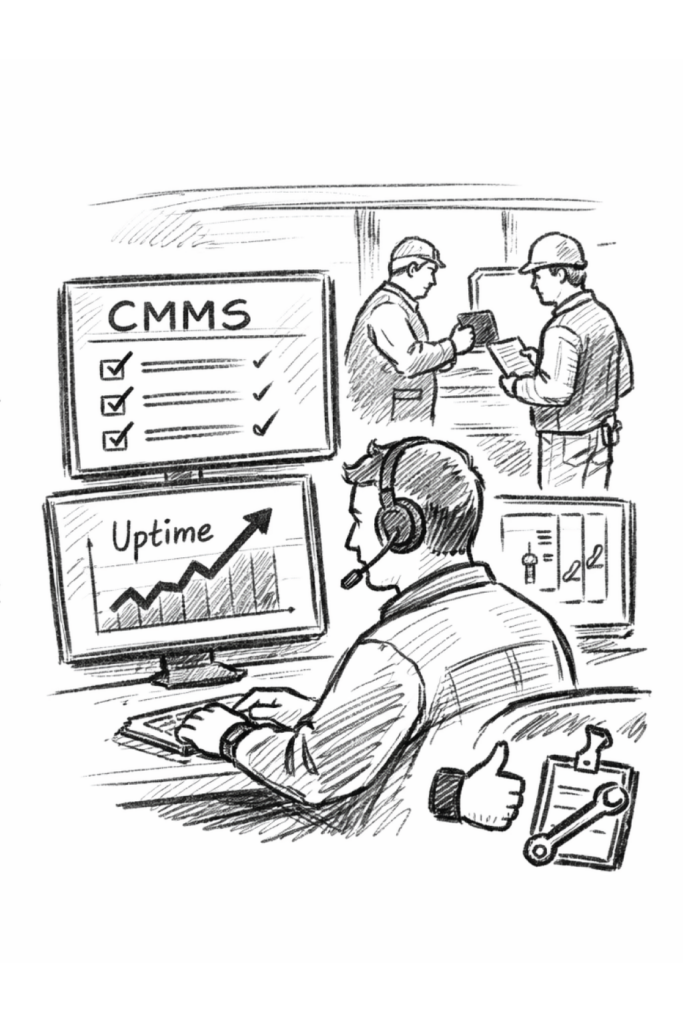
Technology helps here, but only as an enabler. A CMMS can track work and accountability, but trust is built through follow-up and support, not software alone.
The Human Side of Delegation
Not everyone welcomes delegation right away.
Some technicians hesitate because they don’t want to make mistakes. Others aren’t used to being trusted with decisions. In food plants especially, the fear of getting something wrong can run deep.
That’s normal.
Strong leaders start small. They pair delegation with training, mentoring, and reassurance. They stay available without taking control back. Over time, confidence grows, on both sides.
A Familiar Turning Point
Many food plants hit a turning point when delegation becomes intentional.
Downtime drops because preventive work stops slipping.
Engagement improves because people feel trusted.
Managers finally get time to work on long-term improvements instead of living in reaction mode.
The biggest win isn’t just better numbers, it’s a department that no longer depends on one person to function.
Delegation Is a Leadership Choice
Delegation isn’t about doing less. It’s about leading differently.
It’s the decision to build capability instead of dependency.
To trust the system instead of personal heroics.
To create a team that can sustain performance, even when pressure is high.
In food plant maintenance, where reliability and compliance matter every single day, that choice makes all the difference.
Final Thought
Gemba helps you see.
Hoshin Kanri helps you focus.
Delegation helps you scale.
When those three work together, maintenance stops being reactive and starts becoming resilient.
That’s not just good management. That’s how great achievements are built.