Let’s Clear the Air About Kaizen
Let’s be honest.
Most people don’t hate Kaizen.
They hate what the Kaizen workshop turned into.
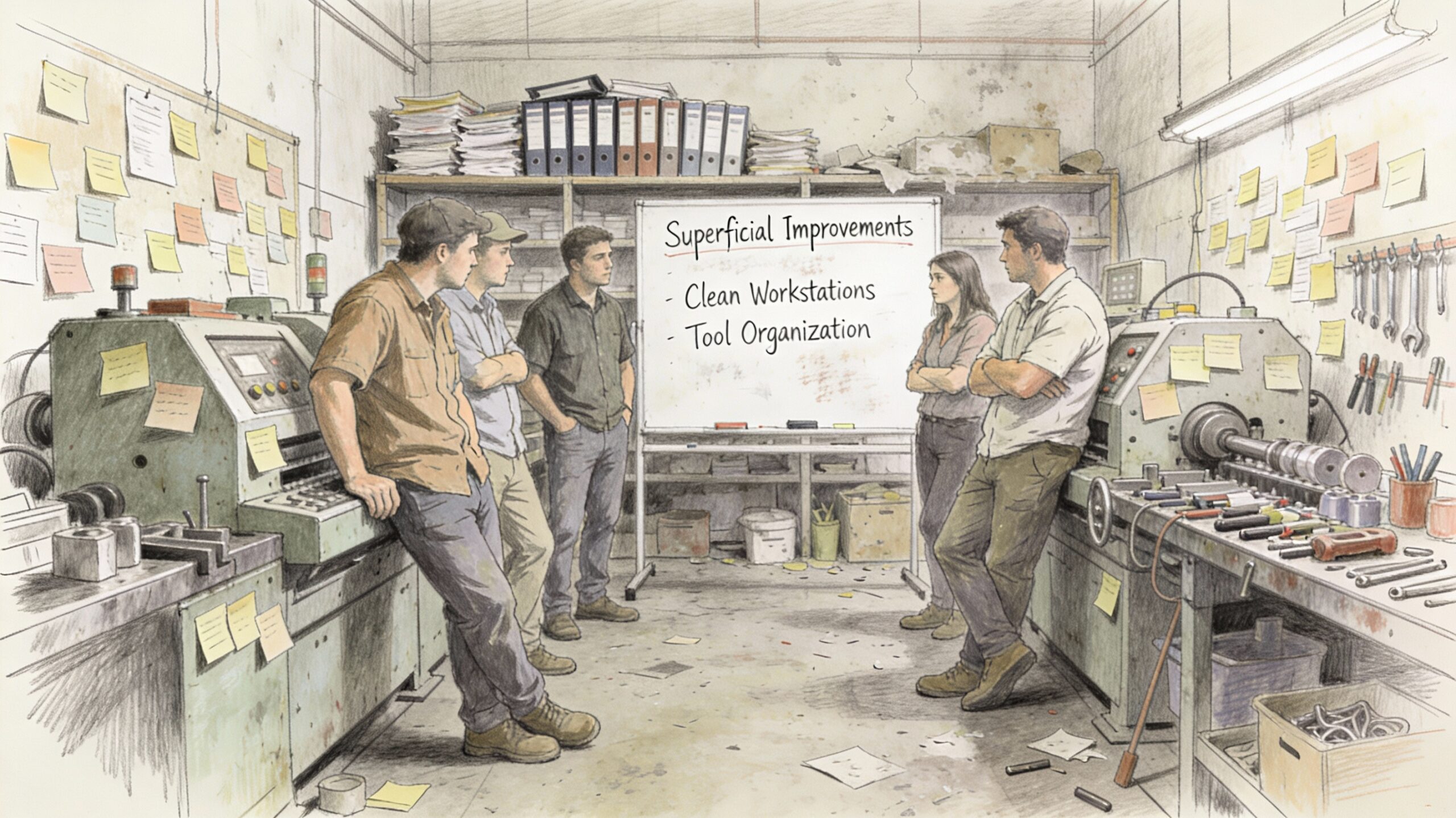
Sticky notes everywhere. Long workshops. High energy on Friday.
And by Monday? The line is back to normal, the problems return, and the binder ends up on a shelf no one opens again.
If that sounds familiar, the problem isn’t Kaizen.
It’s how teams run the Kaizen workshop.
Kaizen Is Not an Event, It’s a Pressure Test
A real Kaizen workshop isn’t designed to ‘fix’ your process.
It’s designed to test your system.
It tests whether Daily Management is strong enough to support improvement. When it isn’t, the workshop doesn’t hide it, it exposes it.
That’s why so many kaizen workshops get labeled as failures.
They reveal gaps leadership wasn’t ready to see.
Why the 12-Step Structure Exists
The 12-step Kaizen workshop wasn’t built to look sophisticated or academic.
It was built to slow people down just enough to stop guessing and start seeing.
Not twelve steps to look organized.
Twelve steps to force discipline.
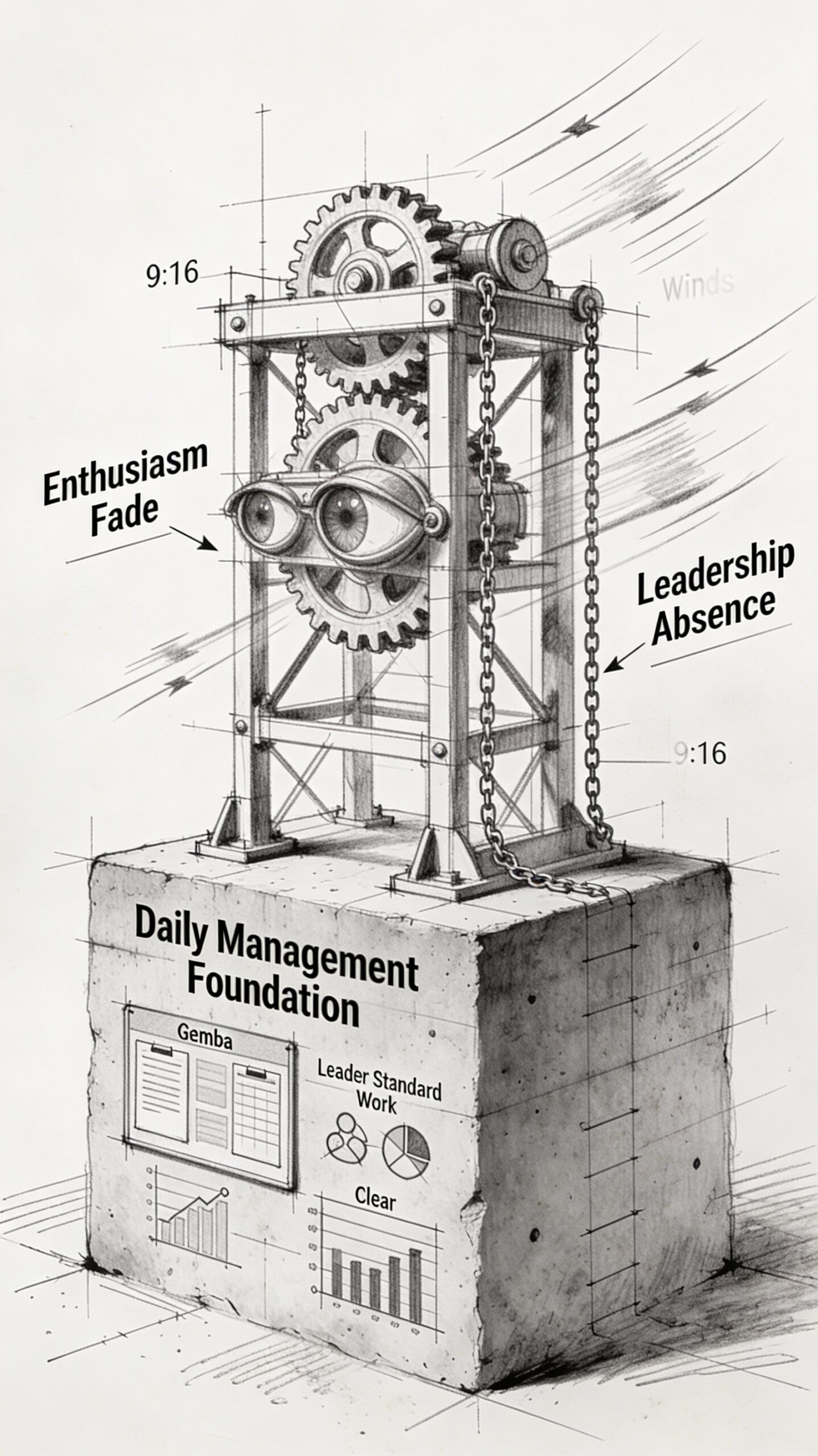
Because improvement without discipline is just enthusiasm, and enthusiasm fades fast.
Kaizen Starts Before the Workshop
A strong Kaizen begins before anyone walks into a room.
If the problem isn’t already visible in Daily Management, the Kaizen is already at risk.
If the data is unclear, the scope will drift.
If leadership isn’t present, the team will solve symptoms and call it progress.
Kaizen doesn’t create clarity.
It requires it.
Observation Comes Before Solutions
When the workshop starts, the real work isn’t brainstorming.
It’s standing at the process. Watching the work. Seeing what everyone learned to walk past.
This is usually the most uncomfortable moment, because reality rarely matches the story we tell ourselves about how the process runs.
That discomfort is useful.
It’s where learning actually starts.
Why the Middle of Kaizen Feels Slow (On Purpose)
This is where most teams get impatient.
They want solutions.
They want action.
They want to ‘get something done’.
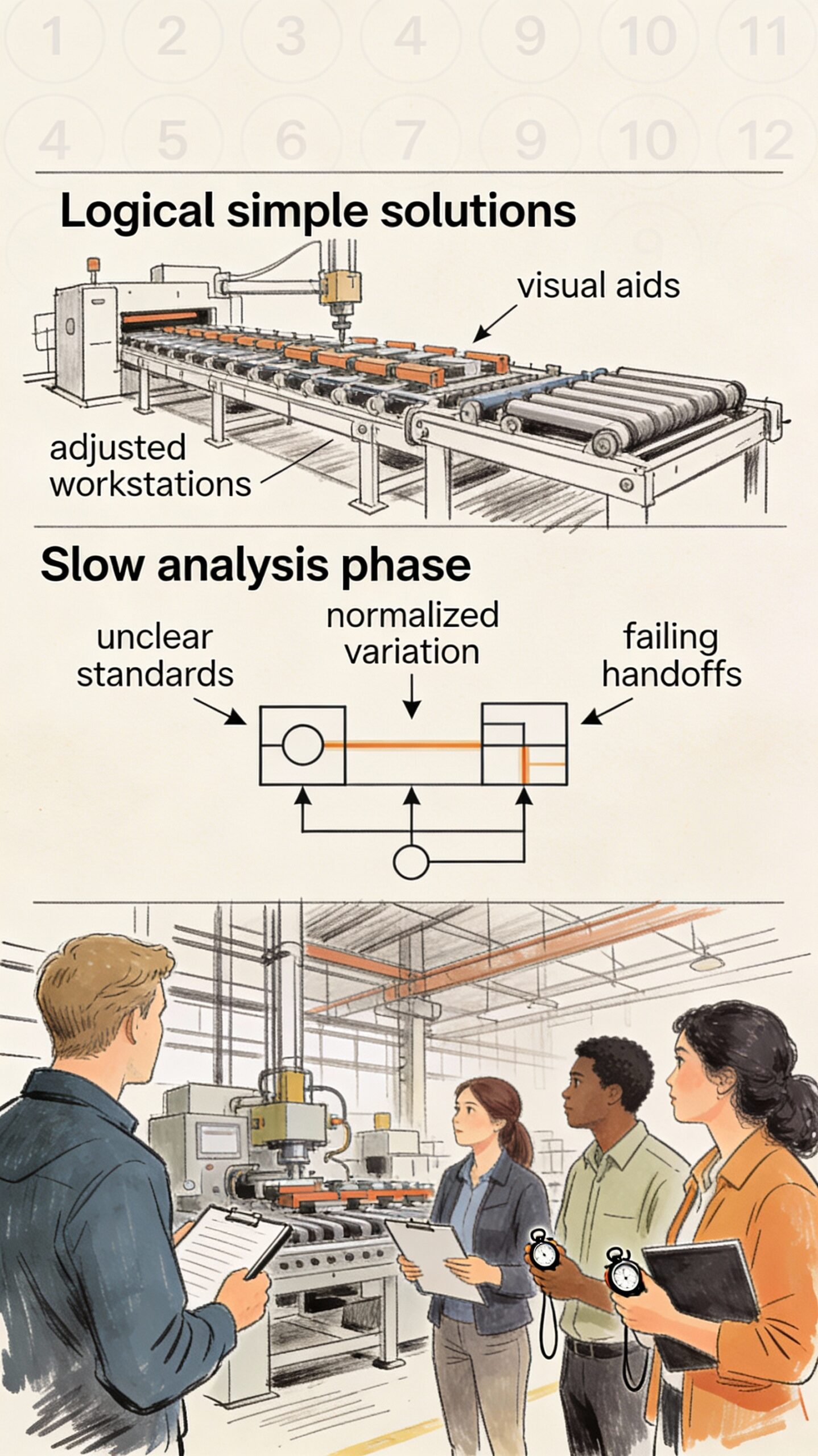
The 12-step structure deliberately slows this part down. You don’t earn countermeasures until you understand:
- where standards are unclear
- where variation has been normalized
- where handoffs quietly fail
- where the system, not the people, is breaking down
Skip this, and you’ll get fast fixes that don’t survive contact with reality.
The Quiet Moments That Matter Most
The best Kaizen moments aren’t loud.
They happen when a technician points at something everyone accepted as normal.
When an operator explains why a workaround exists.
When someone finally says, ‘We do this because the system never supported us’.
That’s not resistance.
That’s the truth finally showing up.
When Solutions Finally Appear
In a well-run Kaizen, solutions don’t feel flashy.
They feel obvious.
Not expensive. Not dramatic. Just logical.
That’s how you know the team did the work. The real value isn’t the list of improvements, it’s the shared understanding of the problem.
Once that aligns, execution becomes easier instead of harder.
Kaizen Does Not Replace Daily Management
This is the part most organizations miss.
A Kaizen workshop is not a substitute for Daily Management.
It’s an extension of it.
If the gains don’t show up on daily boards, in leader routines, and inside standard work, they won’t survive the month.
Kaizen doesn’t replace discipline.
It depends on it.
The Moment Leadership Makes or Breaks Trust
The last steps of a Kaizen matter more than the first.
This is where leadership either builds credibility, or loses it.
If actions don’t get owners, nothing moves.
If follow-up isn’t scheduled, momentum dies.
If leaders disappear, people notice.
Teams don’t remember the workshop agenda.
They remember whether Kaizen changed anything, or just took their time.
If Your Kaizens Aren’t Sticking, Ask Better Questions
If your plant is tired of workshops that go nowhere, don’t ask for more creativity.
Ask harder questions:
Was the problem already visible before the workshop?
Did leaders stay engaged after it ended?
Did the system change, or just the paperwork?
A real 12-step Kaizen isn’t about speed.
It’s about stickiness.
And when improvement actually sticks,
nothing is impossible.