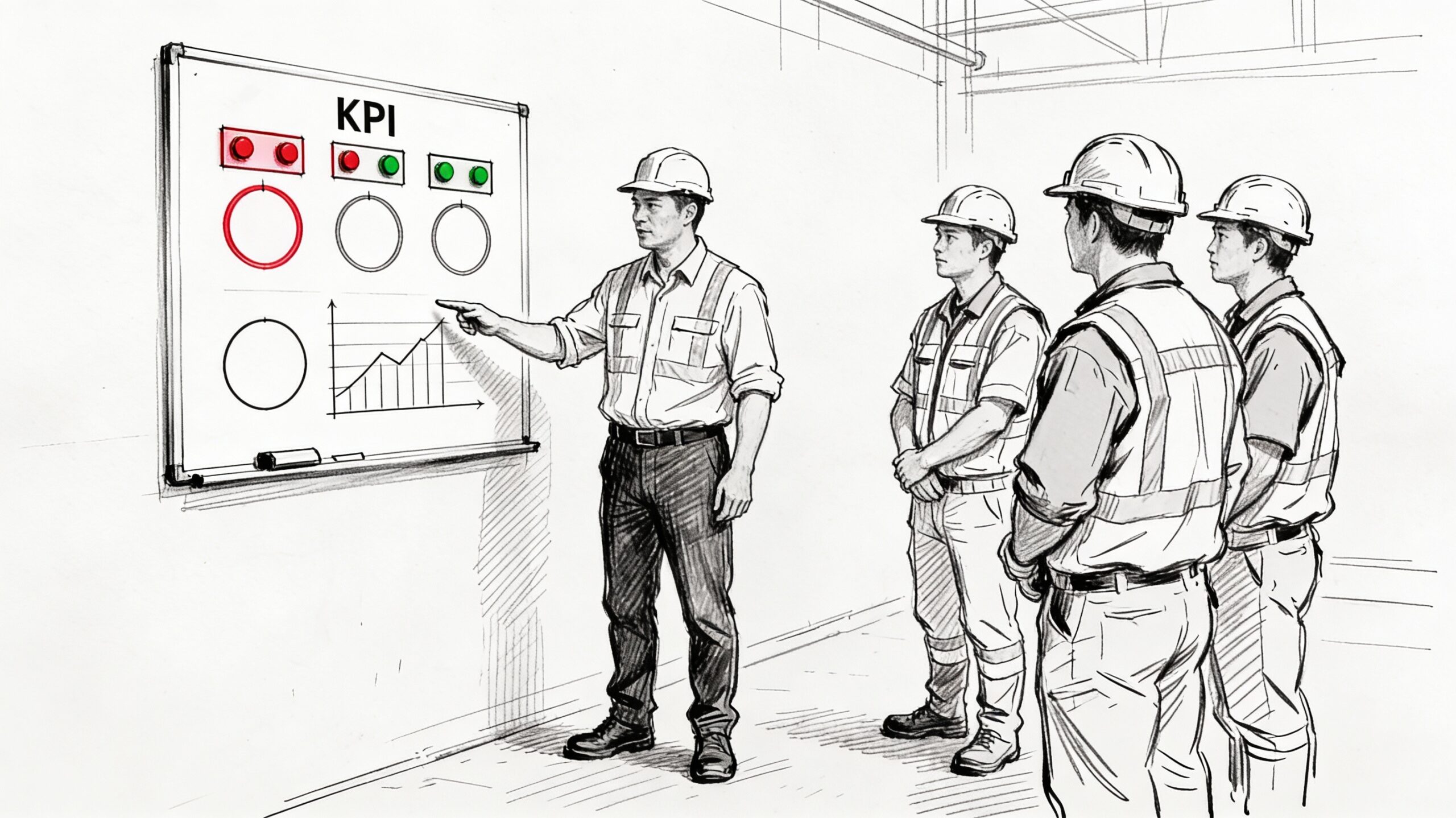
Why Daily Management Quietly Breaks Down
Let’s be honest.
Most plants don’t fail because they lack strategy.
They fail because Monday morning looks exactly like last Monday.
The boards are still there.
The KPIs are still red.
The action items are still open.
And somehow, everyone is ‘busy’.
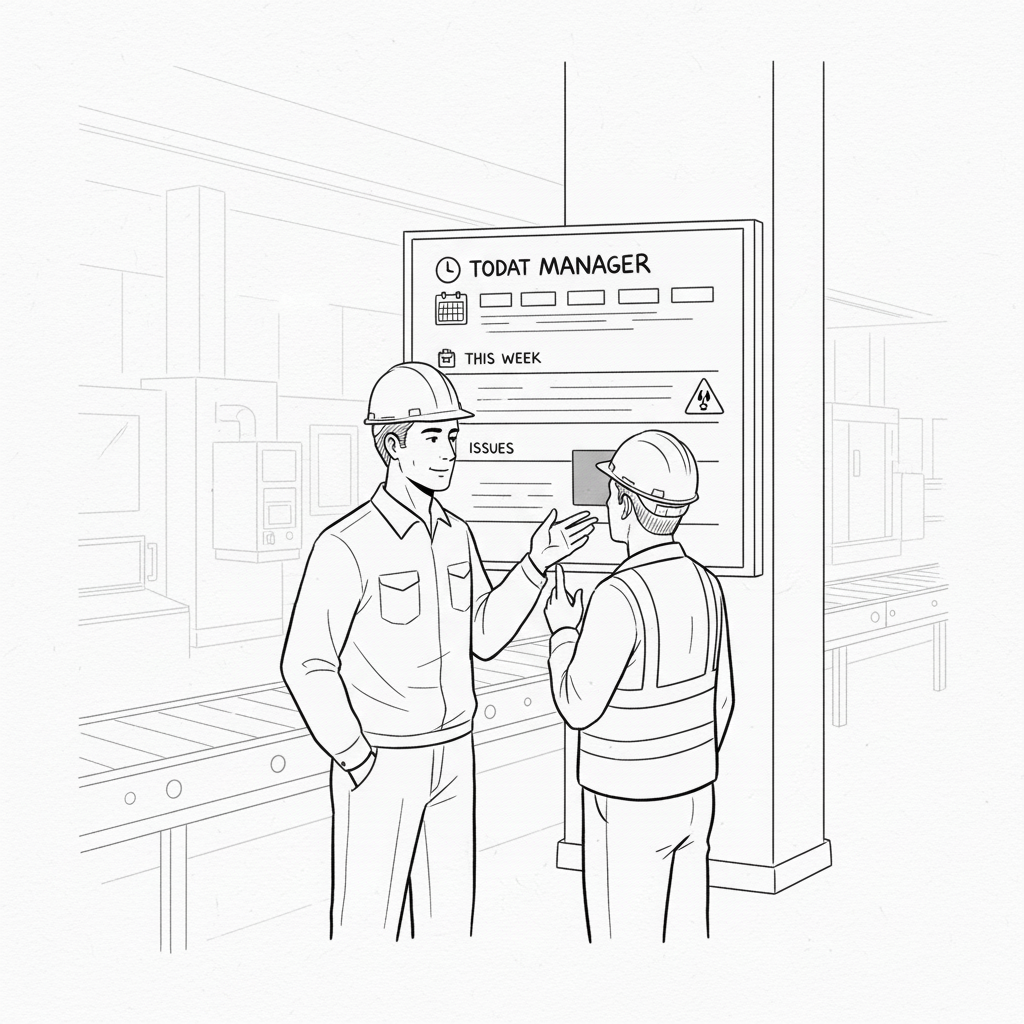
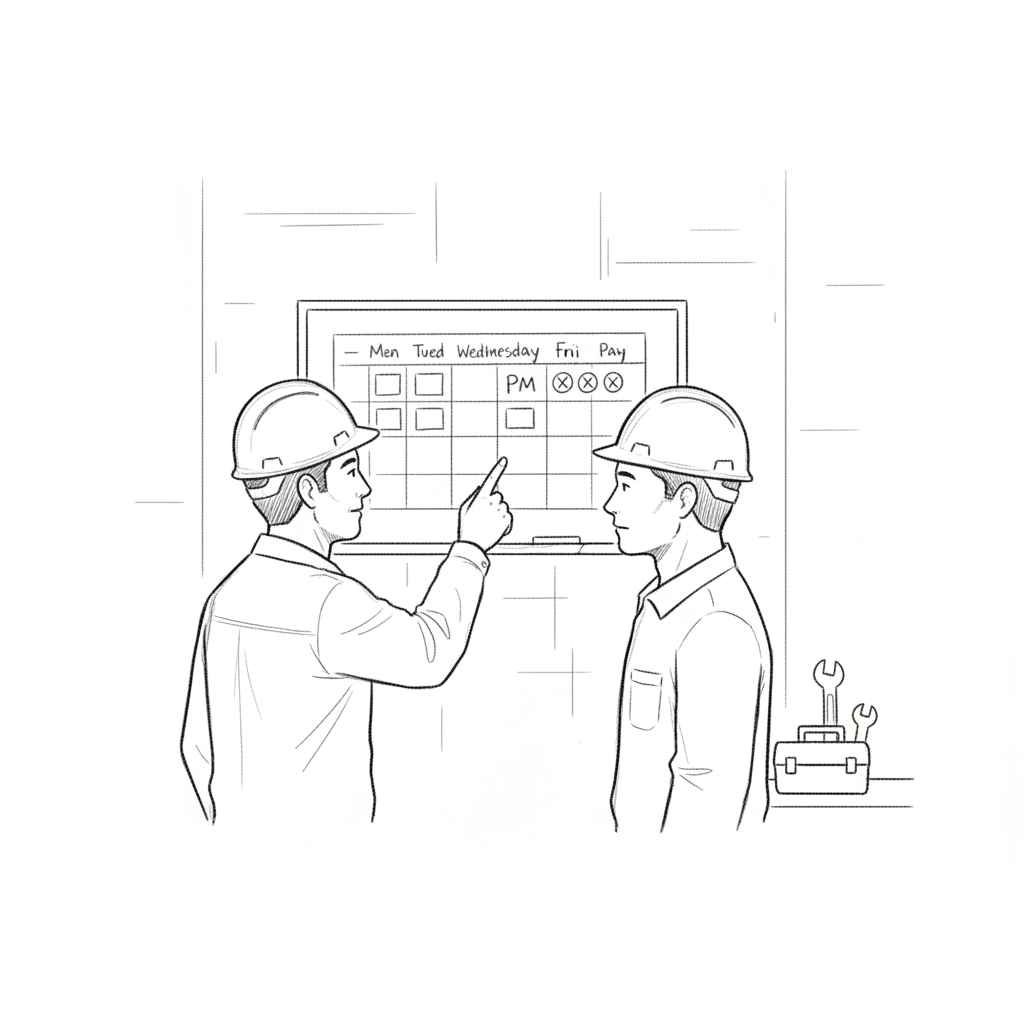
This is where Daily Management quietly dies, not in a dramatic way, but in a slow fade. And almost every time, the root cause is the same.
Leadership presence became optional.
That’s why Leader Standard Work matters. Not as a template. Not as a checklist. But as the backbone that keeps Daily Management from collapsing under real-world pressure.
If you’ve ever rolled out Daily Management and watched it slowly turn into a reporting ritual, you already know this pain.
Daily Management Depends on Leadership Behavior
Daily Management doesn’t fail because people don’t care. It fails because the system depends on leadership behaviors that aren’t defined, protected, or repeated.
When leaders show up inconsistently, standards become suggestions. When follow-up slips, abnormalities blend into the background. When escalation doesn’t happen on time, yesterday’s small problem becomes tomorrow’s major downtime.
Leader Standard Work is what prevents that slide. Not by adding more work, but by removing randomness from leadership. Teams also perform better when leadership expectations remain visible, consistent, and predictable over time.
If Leadership Is Inconsistent, the System Will Be Too
Here’s the uncomfortable truth most plants avoid saying out loud:
If leaders don’t show up the same way every day, the system won’t either.
You can’t expect operators to treat standards as non-negotiable if leadership treats their own routines as flexible. You can’t expect problems to surface early if leaders only come to the floor when something is already on fire.
Leader Standard Work is simply the agreement that leadership behavior deserves the same discipline we expect from production and maintenance.
Same place. Same time. Same questions. Every day.
What Leader Standard Work Looks Like on the Floor
On the shop floor, Leader Standard Work doesn’t look complicated.
It looks like leaders walking past a board and stopping, not to admire it, but to actually use it.
It sounds like:
‘What changed since yesterday?’
‘Where did we miss the standard?’
‘Is this new, or have we seen it before?’
“Who owns the next step?”
Not ‘Why is this red?’
Not ‘Who dropped the ball?’
Just calm, repeatable questions that keep the system honest.
Over time, people stop hiding problems. because they realize leadership isn’t hunting for blame. They’re hunting for signals.
Why Maintenance Feels the Impact First
In maintenance, the effect of Leader Standard Work shows up fast.
When leadership routines are weak, PM compliance becomes a monthly argument. SAP data is ‘directionally correct’. Breakdowns are explained away as bad luck or aging assets.
When Leader Standard Work is strong, those same issues are handled early and quietly.
A missed PM doesn’t wait for a report, it gets challenged the same day.
A repeat failure doesn’t get a new work order, it gets a real conversation.
A schedule miss isn’t excused, it’s understood.
Not because leaders are stricter, but because they’re present.
The Cultural Shift No One Puts on a Slide
The biggest change Leader Standard Work creates isn’t operational.
It’s cultural.
People start to believe that standards actually matter. That problems won’t be ignored. That actions will be followed up. That today’s work connects to something bigger.
That belief doesn’t come from posters or town halls. It comes from repetition.
When leaders show up, even on quiet days, the message is clear:
This system doesn’t disappear when things get hard.
‘We’re Too Busy’ Is the Symptom, Not the Cause
Yes, there’s always resistance.
It feels rigid.
It limits flexibility.
There’s no time for it.
But here’s what plants eventually realize:
Discipline creates freedom.
Leader Standard Work reduces chaos. It shortens meetings. It prevents escalation. It turns surprises into signals instead of emergencies.
The plants that resist it the most are usually the ones drowning in firefighting. And the ones that adopt it properly wonder how they ever led without it.
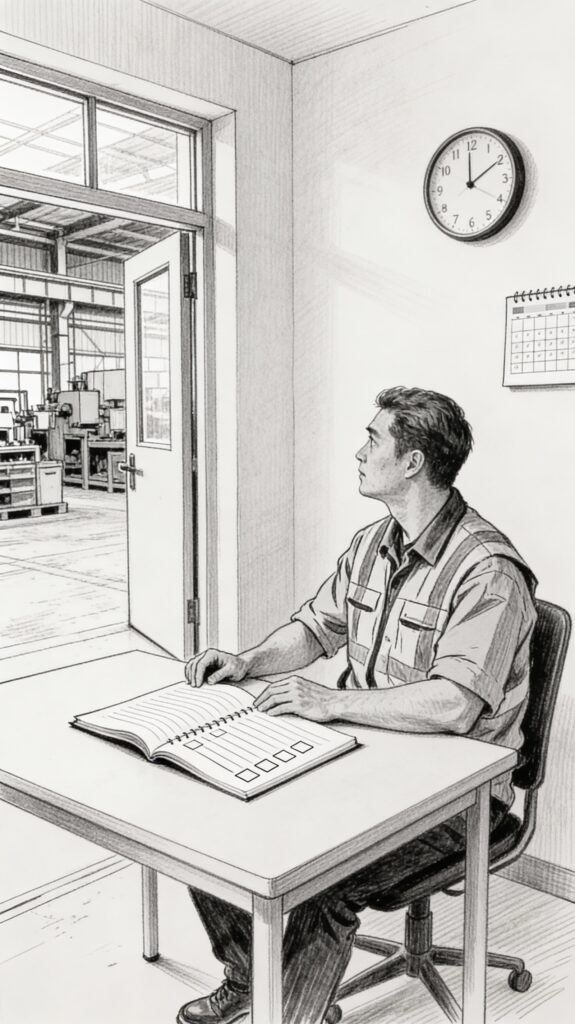
Leader Standard Work Is About Stabilizing Leadership
This is the part that matters most.
Leader Standard Work is not about controlling people.
It’s about stabilizing leadership. Leader standard work exists to reinforce the consistency required in effective daily management systems.
When leadership is stable, Daily Management works.
When Daily Management works, strategy stops living in PowerPoint.
It starts living on the floor, today.
If your strategy isn’t visible in today’s conversations, today’s priorities, and today’s leadership behaviors, it isn’t broken.
It’s just homeless.
Leader Standard Work is what gives it a place to live.
And when leadership becomes deliberate instead of reactive, nothing is impossible. These operational leadership practices are typically developed through years of experience leading maintenance operations in manufacturing environments.