When Every Day Becomes a Reset
Without Daily Management, every day becomes a reset. Yesterday’s problems come back under new names. Last week’s actions are still ‘in progress’. KPIs lag reality by weeks. And leaders spend most of their time reacting instead of leading. Without leader standard work, even strong daily management systems eventually lose consistency.
It’s not chaos, it’s worse. It’s familiar.
That’s why it feels normal… until you stop and ask why the same conversations keep happening.
Strategy Doesn’t Fail, It Disappears
Let’s say the quiet part out loud.
Most strategies don’t fail because they’re wrong.
They fail because no one sees them once the shift starts.
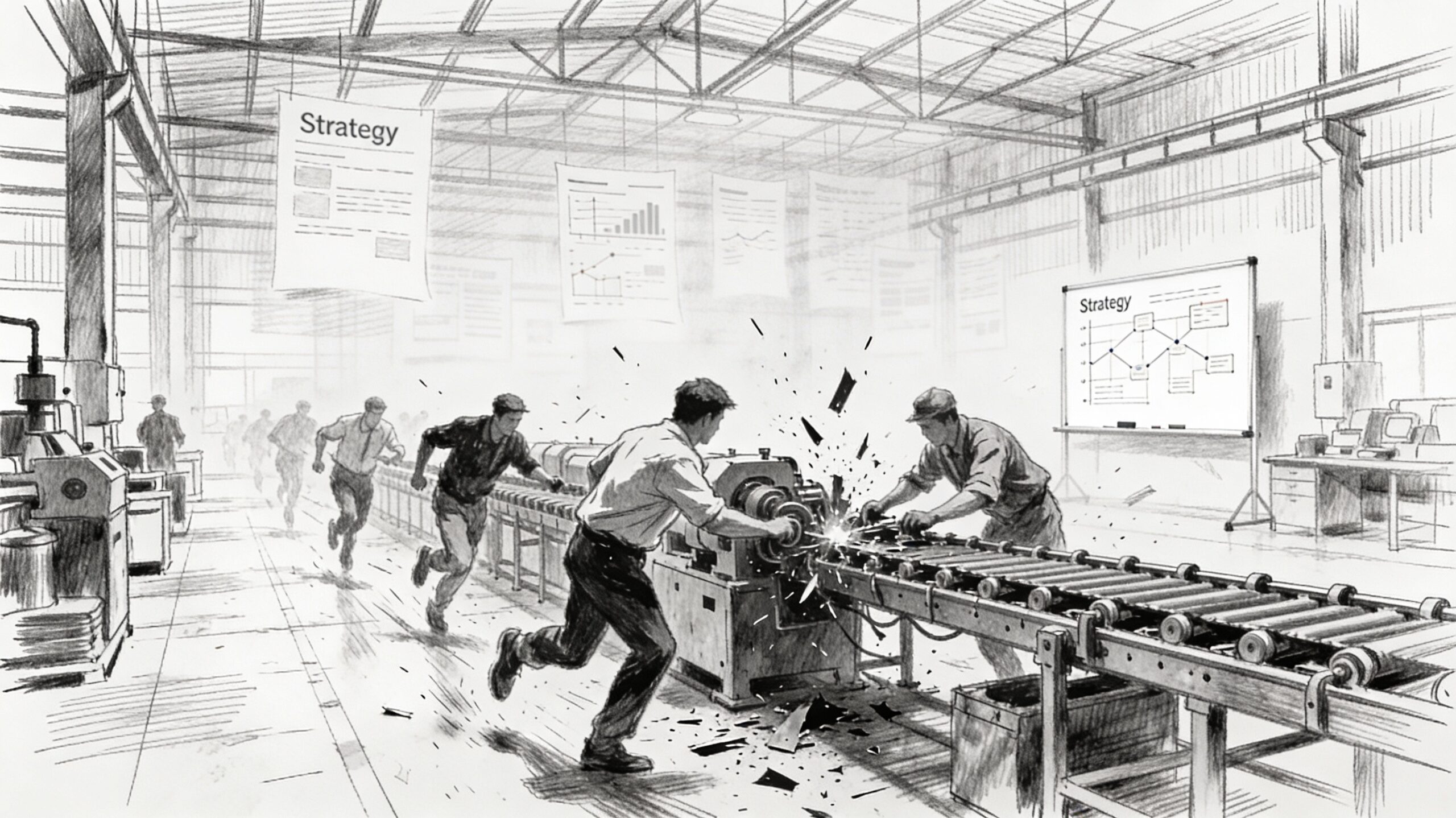
You can feel it in leadership meetings. The strategy sounds solid. The priorities make sense. Everyone nods. Then the plant wakes up, something breaks, someone calls in, a line goes down, and suddenly the strategy is nowhere in the room.
Not because people forgot it. Because it has nowhere to live. That’s what Daily Management is supposed to be. The place where strategy survives the day.
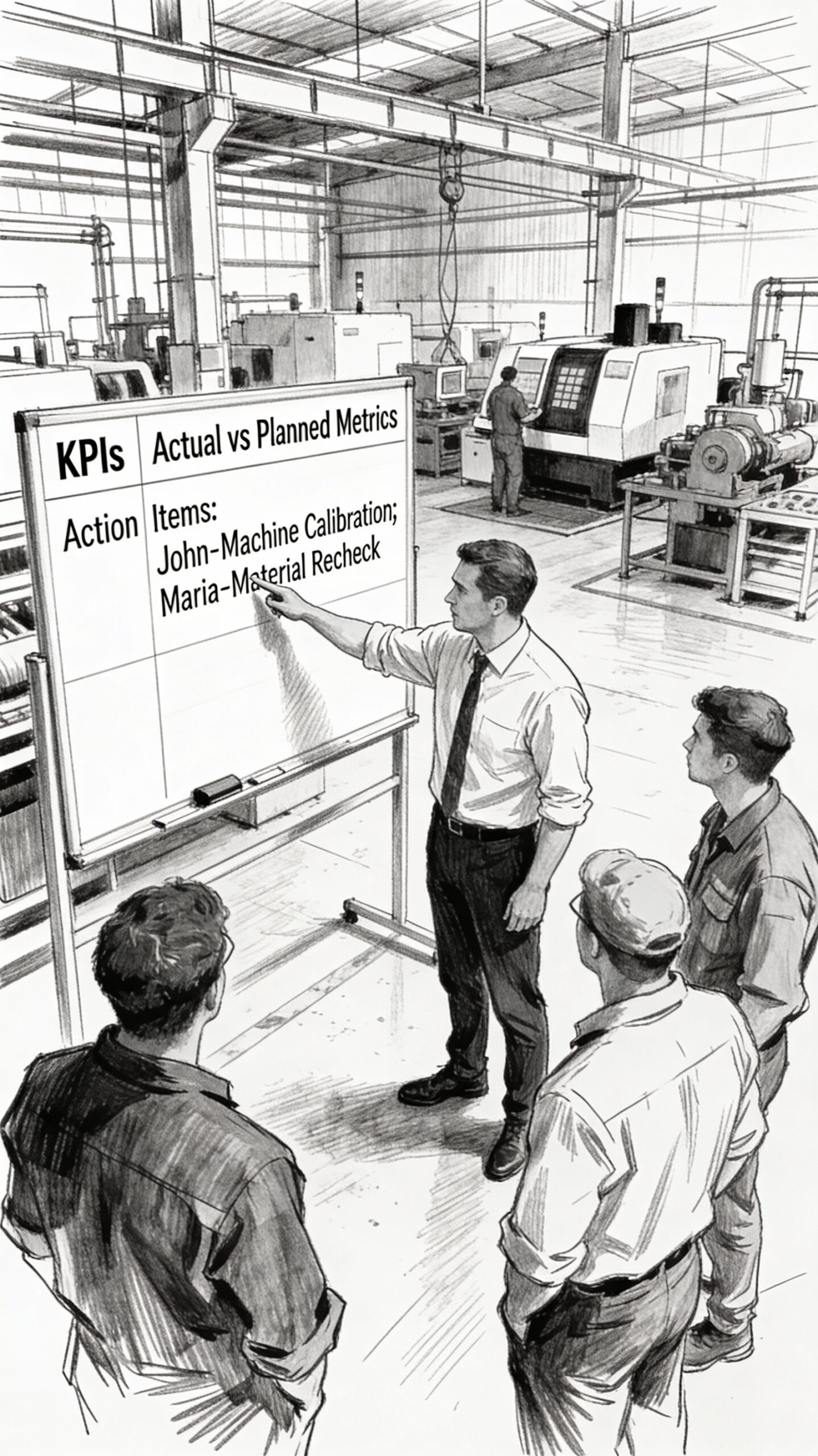
What Daily Management Actually Is? Daily Management isn’t a meeting. It isn’t a board. And it isn’t another layer of reporting. It’s the discipline of facing today honestly. What was supposed to happen? What actually happened? Where did we miss? What are we doing about it, today? When those questions are asked every day, problems stop hiding. They surface early, when they’re still small enough to learn from. That’s when improvement becomes possible.
Closing the Gap Between Strategy and Daily Work
Where most organizations struggle is treating strategy like something separate from daily work.
Strategy lives in decks. Daily work lives in urgency. And the gap between them gets filled with heroics.
Daily Management closes that gap. It connects long-term intent to short-term reality without waiting for a monthly review or a quarterly deep dive. It turns strategy into something people can see, touch, and act on, today.
What Strong Daily Management Looks Like on the Floor
On the floor, strong Daily Management feels different.
You don’t need explanations. You can tell in seconds whether the day is going to plan. Abnormalities stand out. Priorities are clear. Actions have names next to them, not just dates.
There’s no drama.
No storytelling.
Just visibility.
And visibility changes behavior faster than any policy ever will.
Daily Management in Maintenance: From Reaction to Learning
In maintenance, the difference is night and day.
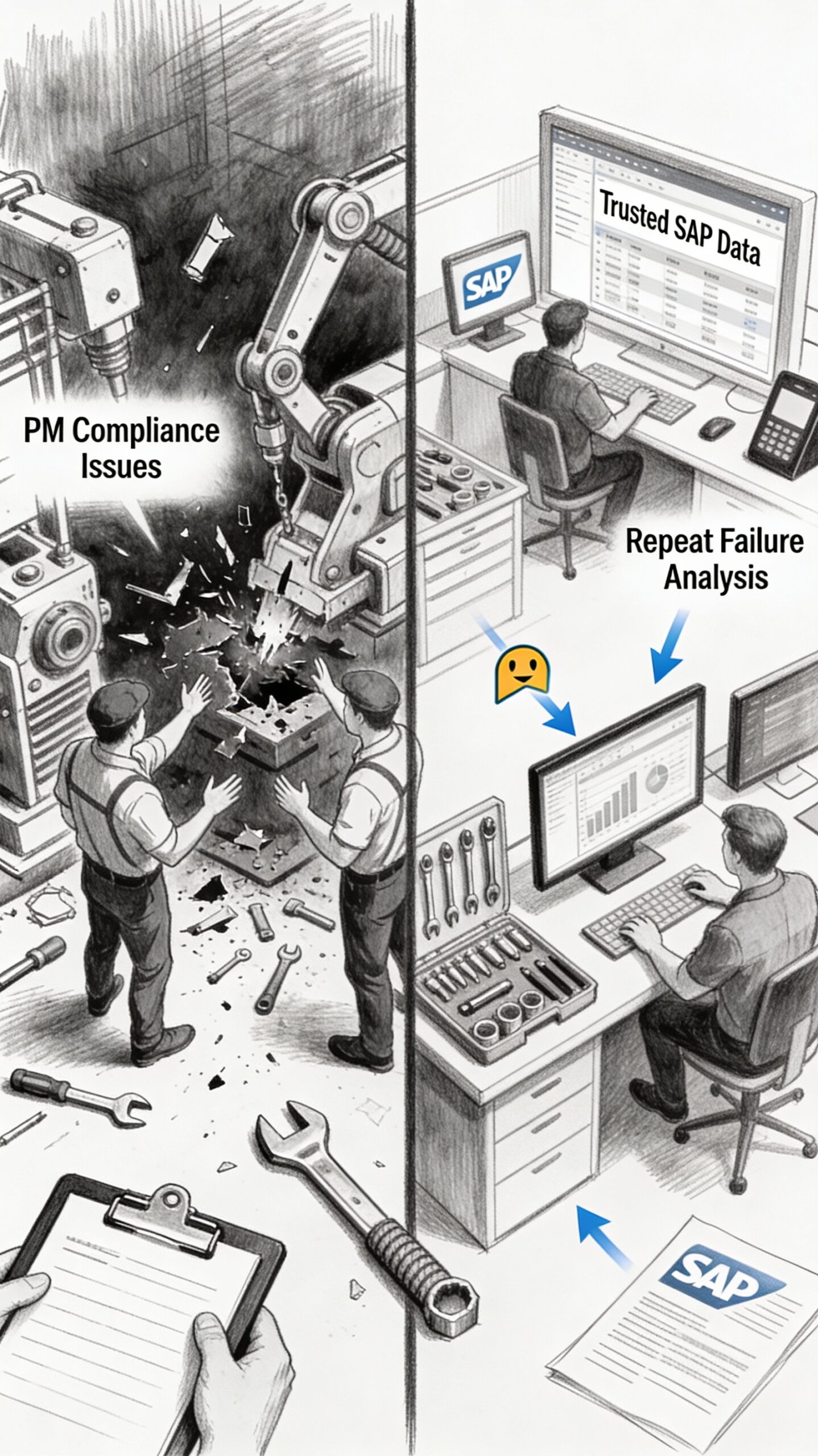
Without Daily Management, PM compliance is an argument. Breakdowns are treated like bad luck. SAP data gets questioned instead of trusted.
With Daily Management, missed PMs don’t wait for reports. Repeat failures don’t get shrugged off. Notifications flow because the system expects them, not because someone chased them.
The plant stops reacting and starts learning. Not because the assets changed, but because the conversation did.
Why Daily Management Fails (And It’s Not the Tools)
Here’s the part that’s easy to miss.
Daily Management doesn’t work because of the tools.
It works because of leadership behaviour.
When leaders show up consistently, ask the same questions, and follow up without exception, people adapt. They stop hiding issues. They stop normalizing instability. They stop assuming ‘this is just how it is’.
The system teaches them what matters. This is also why regular Gemba walks remain one of the most effective ways to keep leadership connected to operational reality.
When Daily Management Becomes Theatre
The moment leadership presence becomes optional, Daily Management turns into theatre.
Boards get updated late. Actions drift. Escalations stall. Everyone stays busy, but nothing really moves.
That’s not a process failure.
That’s a leadership one.
Strategy doesn’t die because it’s flawed. It dies because it’s unattended.
Daily Management Is Where Strategy Earns Its Place
Here’s the bottom line.
If your strategy isn’t visible today, in today’s priorities, today’s discussions, today’s decisions, it isn’t strategy.
It’s an intention.
Daily Management is where strategy earns the right to exist.
Every shift. Every day.
And when it does,
nothing is impossible. Over time, disciplined daily management becomes one of the foundations of successful reliability transformation in manufacturing. These ideas are grounded in decades of hands-on industrial leadership experience across manufacturing environments.