Precision Before Screens Existed
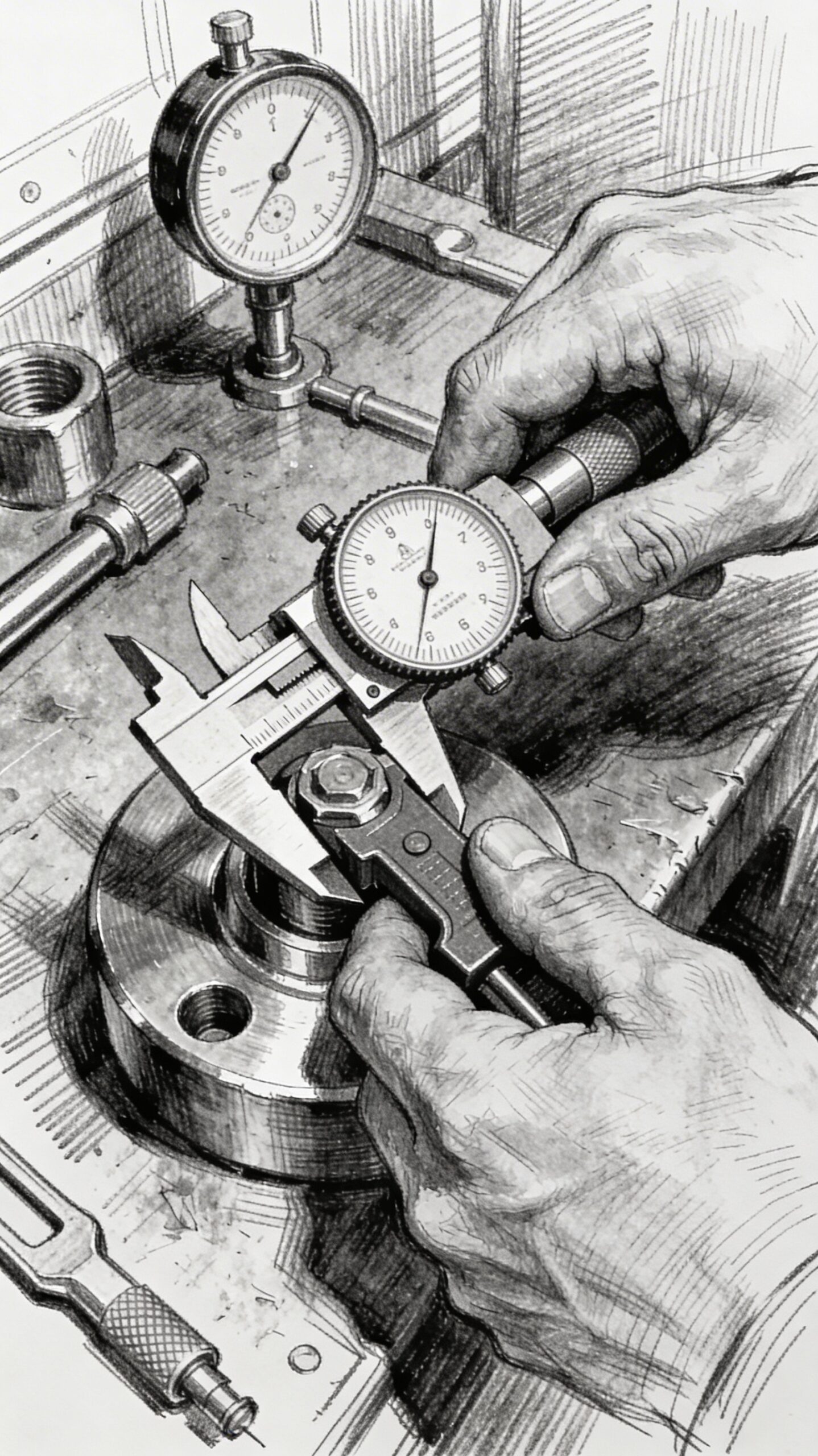
If you picture a modern workshop, everything revolves around digital feedback. Back then, that simply didn’t exist. Machinists relied on tools like micrometers and vernier calipers, but those tools didn’t hand over measurements in an easy-to-read format. You had to interpret them.
That meant reading fine engraved lines, aligning scales perfectly, and trusting your eyes and judgment. Even the pressure applied during measurement mattered. Too much force could slightly deform a part or skew the reading, and that tiny error could cascade into a bigger problem later.
Parts didn’t come out right because a machine confirmed it. They came out right because the machinist knew exactly how much material needed to be removed.
Manual Machining Precision: Lessons from the ‘Surgeons of Metal’
There was a time when machinists were known as the “surgeons of metal,” and honestly, that wasn’t just a poetic nickname. It reflected a real level of skill, discipline, and awareness that defined manual machining precision at its highest level.
These machinists were working long before CNC systems and digital readouts took over. They were holding tolerances down to hundredths of a millimeter using nothing more than mechanical tools, sharp senses, and years of experience. It wasn’t about relying on machines to confirm accuracy. It was about understanding the process so deeply that accuracy became second nature.
Tool Grinding Was a Craft of Its Own
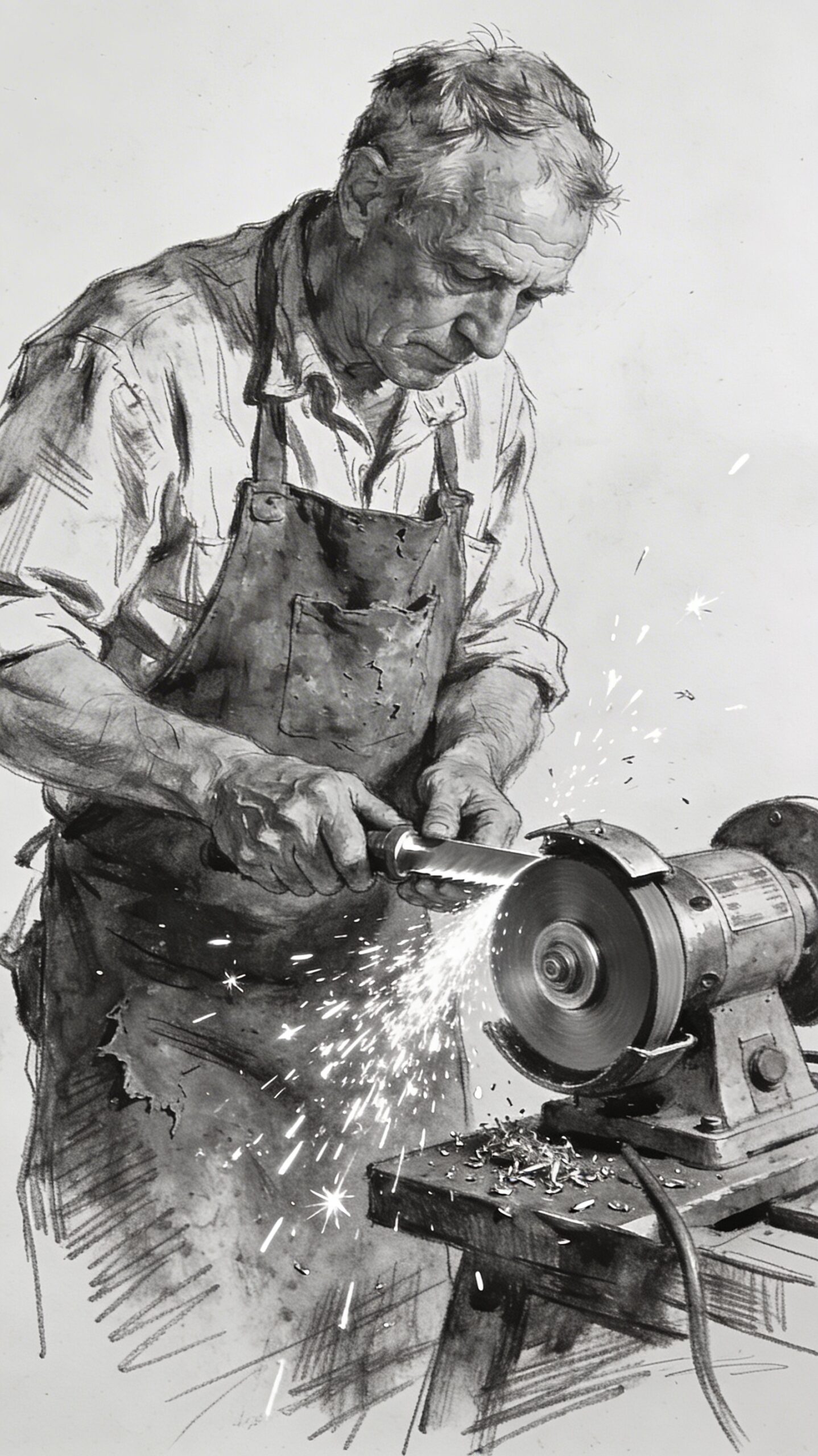
One thing that often gets overlooked today is how much responsibility machinists had over their tools. They didn’t just install inserts and press start. They shaped their own cutting tools from scratch.
Grinding high-speed steel tools required an understanding of cutting angles, rake, and relief. It wasn’t guesswork. It was a skill developed through repetition and observation.
When a tool was ground correctly, everything changed. The cut became smooth, the chips flowed consistently, and the surface finish looked almost polished. When it wasn’t, the machine would chatter, vibrate, and fight the material. The outcome always reflected the person behind the tool, not the machine itself.
Learning Materials Through Experience
There’s a level of connection to materials that’s hard to replicate today. Experienced machinists didn’t need charts or data sheets to understand what they were cutting. They could sense it.
The way a material behaved during contact, the sound it produced, even the type of chips it formed all told a story. Over time, machinists built a kind of internal reference library that guided their decisions in real time.
This ability to adapt instantly is a huge part of what defines true manual machining precision. It’s not just about following parameters. It’s about recognizing when those parameters need to change. That kind of awareness usually comes from years of hands-on industrial experience working directly with manufacturing systems.
Working With the Realities of Physic
Every machine has its imperfections, and older machines made those impossible to ignore.
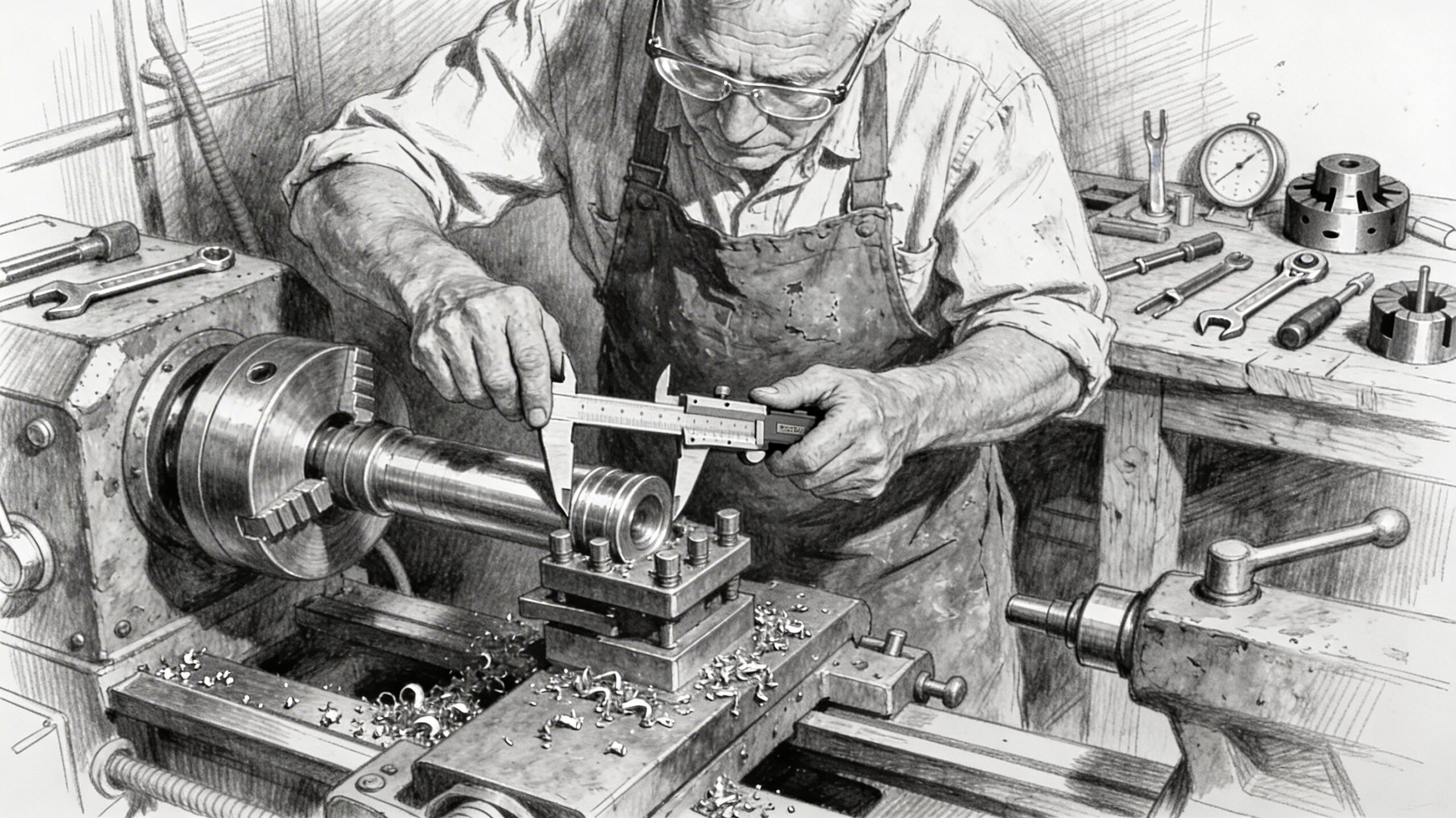
Backlash, for example, forced machinists to think carefully about how they approached every cut. If they overshot a dimension, they couldn’t just reverse slightly and fix it. They had to reset and approach the cut again properly.
Heat introduced another layer of complexity. As parts warmed up during machining, they expanded. That meant measurements taken too early could be misleading. Skilled machinists knew when to pause, let the material settle, and make the final pass only when conditions were right.
This wasn’t theoretical knowledge. It was practical, lived experience.
Mathematics Happening in Real Time
Manual machining also demanded a strong grasp of mathematics, but not in an abstract sense.
It was applied directly at the machine.
Cutting threads often required setting up gear trains manually to achieve the correct ratios. Instead of selecting a program, machinists had to build the mechanical relationship themselves. Every adjustment reflected an understanding of motion, synchronization, and precision.
It was engineering in its most tangible form.
Improvisation Was Part of the Job
Not every part fits neatly into a standard setup, and that hasn’t changed.
What has changed is how often people rely on predefined solutions.
Machinists in the past had to improvise constantly. When a part couldn’t be held conventionally, they created their own solutions. They adjusted setups, fabricated fixtures, and carefully aligned workpieces until everything ran true.
This ability to solve problems on the spot wasn’t exceptional. It was expected.
Listening to the Machine
Before sensors and diagnostics, machines communicated in simpler ways. They made noise, they vibrated, and they responded physically to what was happening. Machinists learned to listen. A subtle change in sound could signal tool wear or excessive load. A vibration could indicate chatter before it became visible on the surface finish.
Sometimes, just resting a hand on the machine was enough to feel when something wasn’t right. That level of awareness allowed problems to be corrected early, often before any damage was done.
Why Manual Machining Precision Still Matters Today
Modern manufacturing has come a long way, and there’s no denying the advantages of automation. CNC systems bring consistency, speed, and repeatability that manual processes can’t match at scale.
But the foundation hasn’t changed.
Understanding materials, managing variables, and respecting the physics of machining are still essential. Technology may handle execution, but human knowledge still guides decisions, especially when things don’t go as planned.
The lessons from manual machining precision are still embedded in every well-run operation today.
Final Thoughts
Even modern reliability transformation efforts still depend on the same principles of precision, discipline, and process understanding. Looking back at these machinists isn’t about nostalgia. It’s about recognizing where true precision comes from.
They showed that accuracy isn’t just a feature of advanced machines. It’s the result of skill, awareness, and a deep respect for the process. Technology continues to evolve, but those principles remain unchanged. And in many ways, the more advanced our tools become, the more valuable that foundational understanding really is. A strong engineering foundation also plays an important role in understanding how precision systems behave under real operating conditions.