The ‘8% Conversation’, a Leadership Tool Every Manager Should Learn
Most leadership difficult conversations at work fail for one simple reason, people rush straight to the problem. They jump into criticism, correction, or discipline before preparing the conversation properly. As a result, the discussion becomes tense almost immediately. People get defensive, misunderstandings grow, and sometimes resentment stays long after the meeting ends.
Over the years, I started looking at these conversations differently. It’s called the ‘8% Conversation’. The idea is simple. Only a very small part of the meeting should be the actual hard message. The direct correction, coaching point, or disciplinary feedback often represents only about 8% of the conversation.
The other 92% is preparation. That is where leadership really happens.
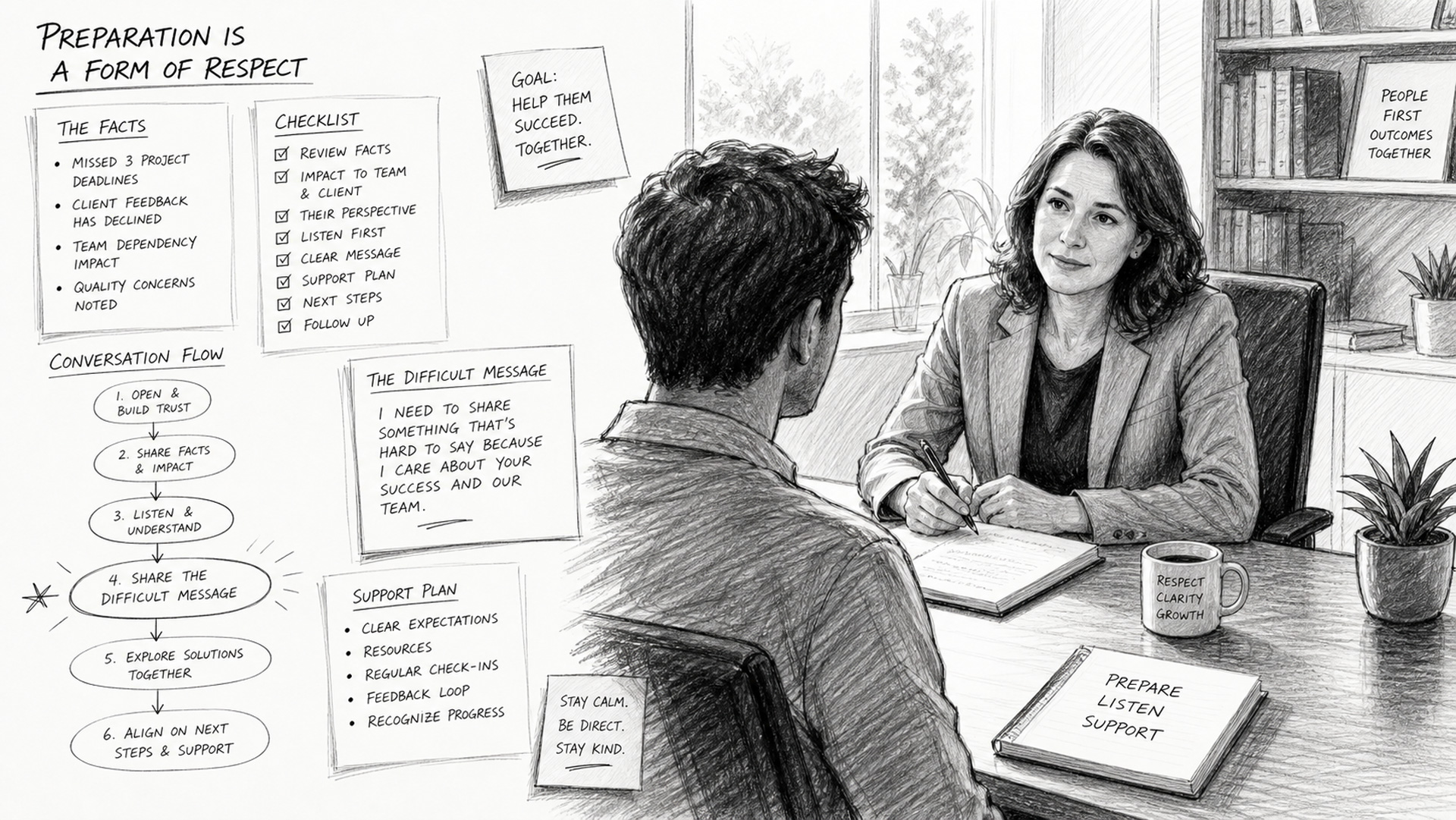
What Is the ‘8% Conversation’?
The ‘8% Conversation’ is a leadership approach used during difficult workplace discussions, including coaching meetings, performance reviews, corrective feedback, accountability conversations, and one-on-one discussions.
The concept is straightforward. The uncomfortable part of the discussion should only take up a small portion of the meeting. Most of the conversation should focus on helping the other person become ready to actually hear the message.
That preparation includes building trust, creating understanding, lowering defensiveness, clarifying expectations, discussing facts, and showing respect throughout the conversation.
Once that groundwork is in place, the final direct feedback becomes much easier to deliver and much easier to receive. That final moment is the 8%.
Why Many Managers Get Difficult Conversations Wrong
A lot of leaders believe difficult conversations are mainly about authority.
They think they need to sound tough, make a strong point, or prove accountability immediately. However, most people do not improve when they feel attacked.
The moment criticism becomes personal, employees usually stop listening and start defending themselves instead.
The conversation quickly becomes emotional instead of productive.
Strong leadership is not about winning the conversation. It is about helping someone improve. Improvement only happens when the other person stays engaged long enough to truly hear the message.
The 92%: Preparing the Conversation Properly
The first part of the conversation matters the most.
Think of it like preparing soil before planting seeds. If the ground is hard, nothing grows. Leadership conversations work the same way.
When people feel cornered from the beginning, even good feedback can sound like an attack.
That is why preparation matters.
Start With Professional Respect
Begin calmly and professionally.
Not cold, not sarcastic, and not aggressive.
Something simple can completely change the tone of the discussion: ‘I wanted to talk because I value your role on this team and I think this is important.’
That immediately tells the other person two things. The conversation is serious, but it is not personal destruction.
People respond differently when they feel respected from the start.
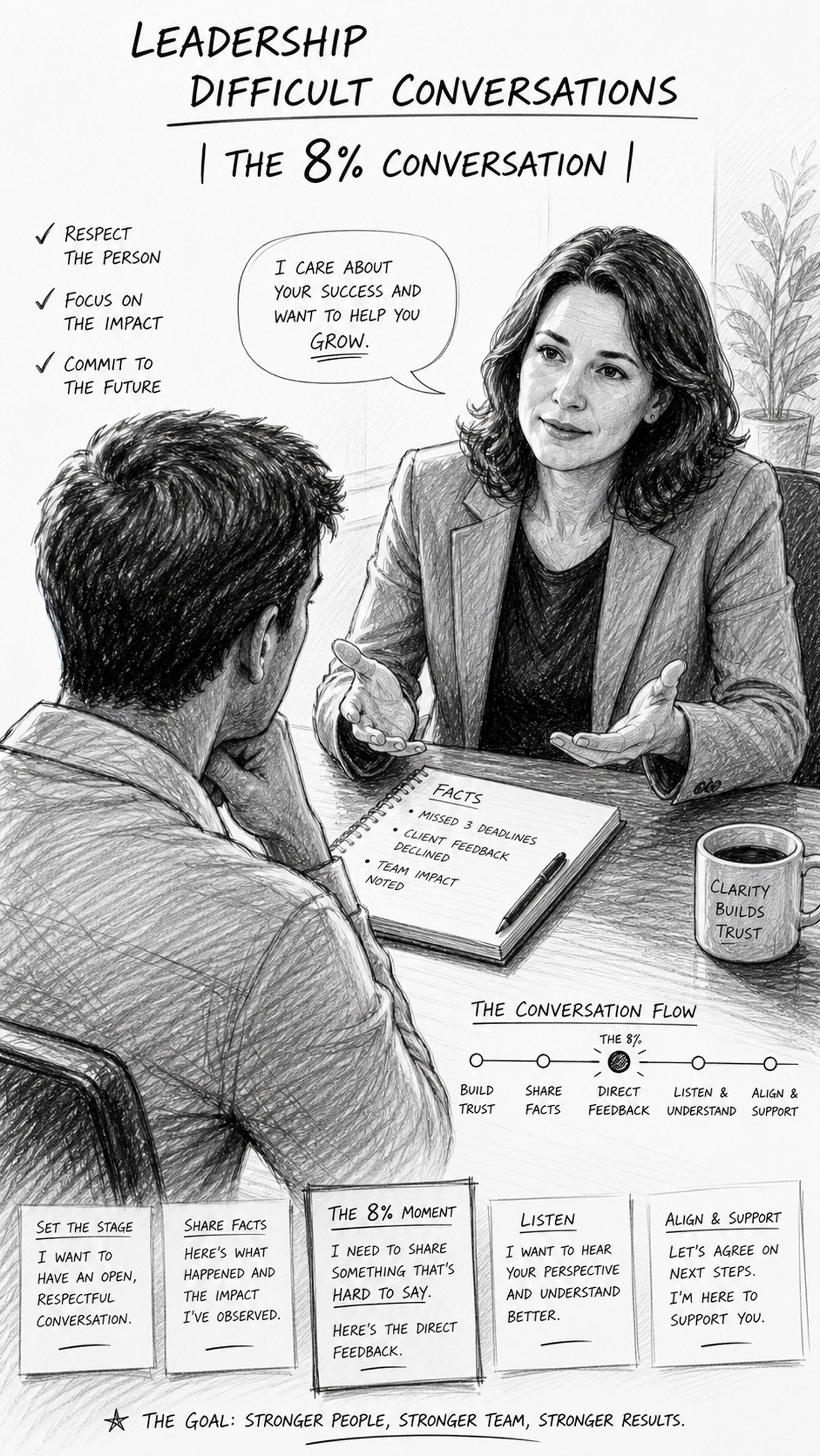
Let the Other Person Speak
This step matters more than many managers realize. Sometimes people already know they made a mistake. Other times, there may be details you do not yet understand. In some cases, people simply need to feel heard before they can accept feedback.
Listening does not remove accountability. It improves understanding. Employees are far more likely to stay engaged when they feel the conversation is fair instead of one-sided.
Focus on Facts Before Judgment
Before giving opinions, discuss observations first. Talk about what happened, when it happened, the impact it created, and what the expectation should have been.
Avoid emotional statements. For example, saying ‘You don’t care’ usually creates defensiveness right away.
On the other hand, saying ‘The work order was closed without completing the verification step’ keeps the discussion focused on facts instead of emotions. Facts reduce arguments because they create clarity.
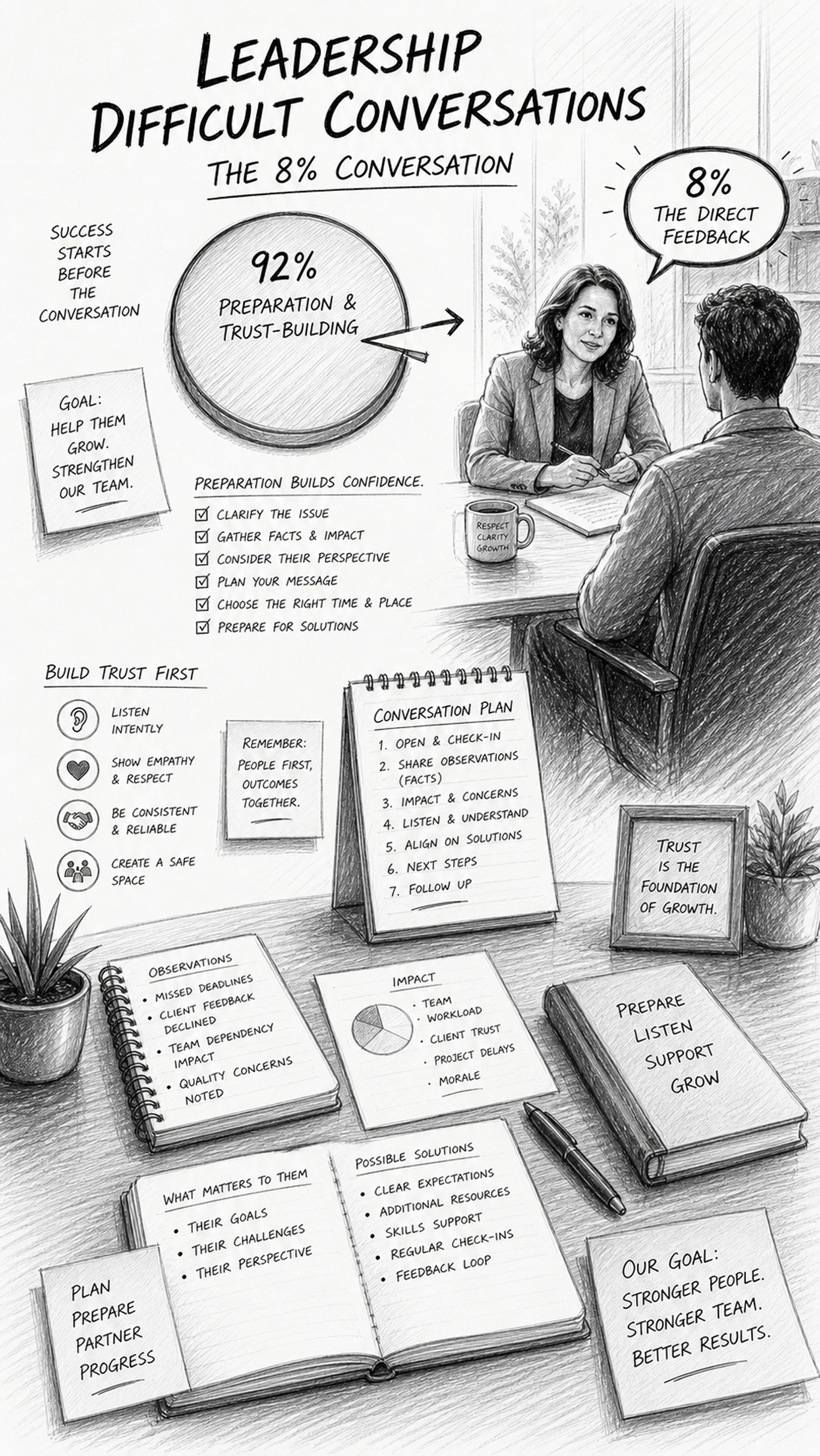
Lower Defensiveness Before Delivering the Message
The purpose of the 92% is to keep the discussion constructive long enough for the real message to land properly. That means staying calm, asking questions, controlling emotions, and avoiding humiliation or embarrassment.
Once emotions take over, the message usually gets lost. Professional leaders understand this well. They do not use difficult conversations to release frustration. Instead, they use them to improve standards while still protecting dignity.
That balance matters.
The Final 8%: Cut to the Chase
Eventually, every leadership conversation reaches the moment where clarity is required. This is the 8%. This is where the leader clearly explains what needs to change, what standard was missed, and what accountability looks like moving forward.
The key is keeping the message respectful, direct, and simple. For example, ‘I need you to understand that skipping this safety step cannot happen again. The expectation moving forward is full compliance every time.’
That is the 8%. Short. Clear. Professional. No drama needed.
Why the ‘8% Conversation’ Works
This approach works because people become more open to feedback when they feel respected, heard, and treated fairly. The 92% prepares the person emotionally to receive the final message. Without preparation, even valuable feedback can feel like a personal attack. With preparation, the same message becomes much easier to accept and act on. That difference changes the entire outcome of the conversation.
Leadership is not about avoiding hard conversations. Some managers avoid difficult discussions because they want to protect relationships. Unfortunately, avoiding accountability usually creates larger problems later. Standards begin to drop. Frustration grows inside the team. High performers lose motivation, and trust slowly weakens across the workplace. This is where strong daily management practices become critical.
Strong leadership requires courage. Not loud courage. Professional courage. The kind of courage that allows someone to sit down, stay calm, treat people with dignity, and still address what needs to be addressed. That is real leadership.
Final Thought on Leadership Difficult Conversations
The best managers are not the ones who speak the hardest. They are the ones who prepare conversations well enough that the difficult message can actually help someone improve. That is the power of the ‘8% Conversation.’ The final correction may only take 30 seconds. However, the leadership behind those 30 seconds starts long before the words are spoken. Leadership accountability is not about punishment. It is about clarity and consistency. If you enjoy practical discussions about leadership difficult conversations, operational discipline, maintenance leadership, and workplace culture, feel free to follow me on LinkedIn for more real-world insights from the manufacturing floor.