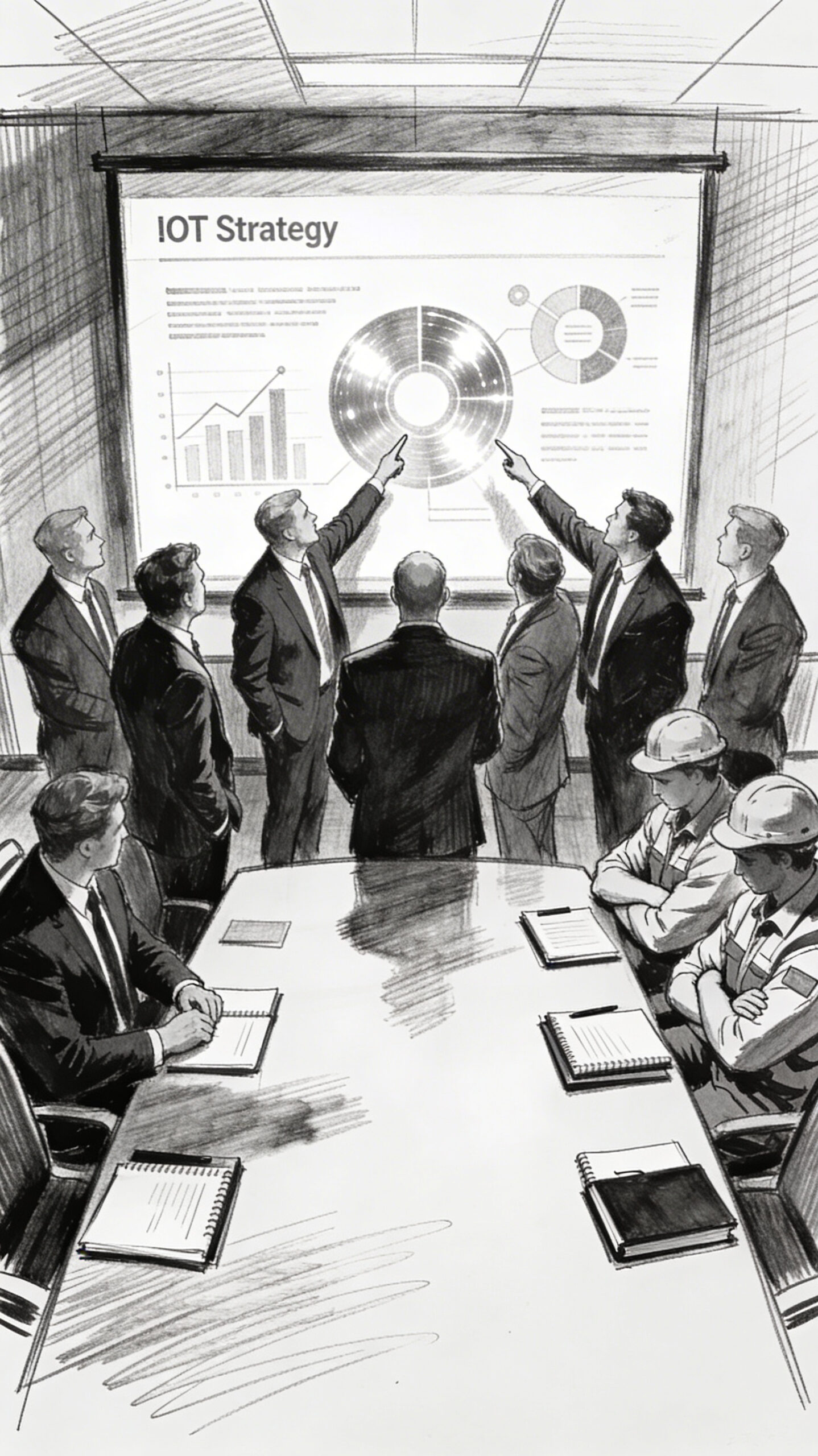
Technology Comes Before Strategy
If no one clearly connects that answer to performance, whether that means improving OEE, reducing breakdowns, controlling maintenance costs, or optimizing energy use, the entire system starts drifting.
At that point, IoT turns into something that looks impressive but delivers very little. Technology on its own doesn’t create value. It only supports a strategy that already exists.
Walk into almost any manufacturing boardroom today and you’ll hear the same excitement around IoT.
Smart sensors, real-time dashboards, predictive maintenance, AI-driven insights. It all sounds powerful, and to be fair, it is.
But here’s the part no one likes to admit.
Most IoT project failure doesn’t happen after implementation. It happens long before that. It starts in how teams imagine, plan, and position the initiative from the beginning.
Once that foundation is off, no amount of technology can fix it.
Walk into almost any manufacturing boardroom today and you’ll hear the same excitement around IoT.
Smart sensors, real-time dashboards, predictive maintenance, AI-driven insights. It all sounds powerful, and to be fair, it is.
But here’s the part no one likes to admit.
Most IoT projects don’t fail after implementation. They fail long before that. They fail in how teams imagine, plan, and position them from the start.
And once that foundation is off, no amount of technology can fix it.
One of the biggest reasons behind IoT project failure is surprisingly simple. Companies start with the technology instead of the problem.
Teams install sensors across the plant. Dashboards light up. Data starts flowing. On the surface, it looks like progress.
But then someone asks a very basic question. What decision is this data supposed to improve?

More Data Creates Less Clarity
Another common cause of IoT project failure is the assumption that more data automatically leads to better decisions.
Modern systems can collect an overwhelming amount of information. Thousands of data points flow every second across multiple assets, filling dashboards with charts and trends.
At first, it feels like control. In reality, it quickly turns into noise.
Technicians get overwhelmed. Alerts lose meaning. Supervisors begin ignoring alarms because everything feels urgent all the time.
And when everything feels urgent, nothing really is.
Companies that succeed with IoT don’t chase more data. Instead, they define what actually matters, set clear thresholds, and make sure every signal leads to a specific action.
When Monitoring Stays Disconnected From Action
There’s a critical gap that often gets overlooked. Monitoring is not the same as maintenance.
You can detect a vibration spike or a temperature anomaly, but if that information doesn’t lead to action, it has no real value.
Many IoT systems operate in isolation. They sit in separate dashboards, require separate logins, and produce separate reports. At the same time, actual maintenance work happens inside structured systems like SAP or CMMS platforms.
If the system doesn’t automatically turn a detected issue into a notification, convert it into a work order, and push it into the planning process, it simply remains information.
And information alone doesn’t fix anything.
Real value appears when detection connects directly to execution.
Cybersecurity Is Treated Too Late
Connecting machines to networks changes the risk landscape completely.
In industries like food manufacturing, even small disruptions can be costly. A compromised system goes far beyond downtime. It becomes a business-critical threat.
If teams treat cybersecurity as an afterthought, gaps start to appear. Weak network segmentation, unsecured protocols, and unclear access controls can quickly turn a smart factory into a vulnerable one.
Strong IoT strategies don’t bolt security on at the end. They build it in from the beginning.
The People Who Use It Aren’t Involved
The People Who Use It Aren’t Involved
There’s something important that often gets missed in these initiatives.
Maintenance teams don’t automatically embrace IoT. In many cases, they see it as just another system layered on top of an already busy workflow.
If teams don’t involve technicians in defining thresholds, selecting pilot assets, or validating alerts, resistance builds naturally.
Once teams bring them in, everything changes.
Experience meets data. The person who understands how a machine behaves in real conditions becomes the one who gives meaning to predictive signals.
IoT doesn’t replace expertise. It strengthens it.
No One Truly Owns the Outcome
IoT projects often sit between departments.
IT handles infrastructure. Engineering focuses on equipment. Maintenance looks after reliability. Finance wants to see returns.
Without a clear owner, projects lose direction. Progress slows down. Priorities shift. Accountability becomes blurred.
In the end, everyone is involved, but no one is responsible for results.
For IoT to work, ownership must be clear. Someone needs to take responsibility for improving real performance indicators, not just deploying technology.
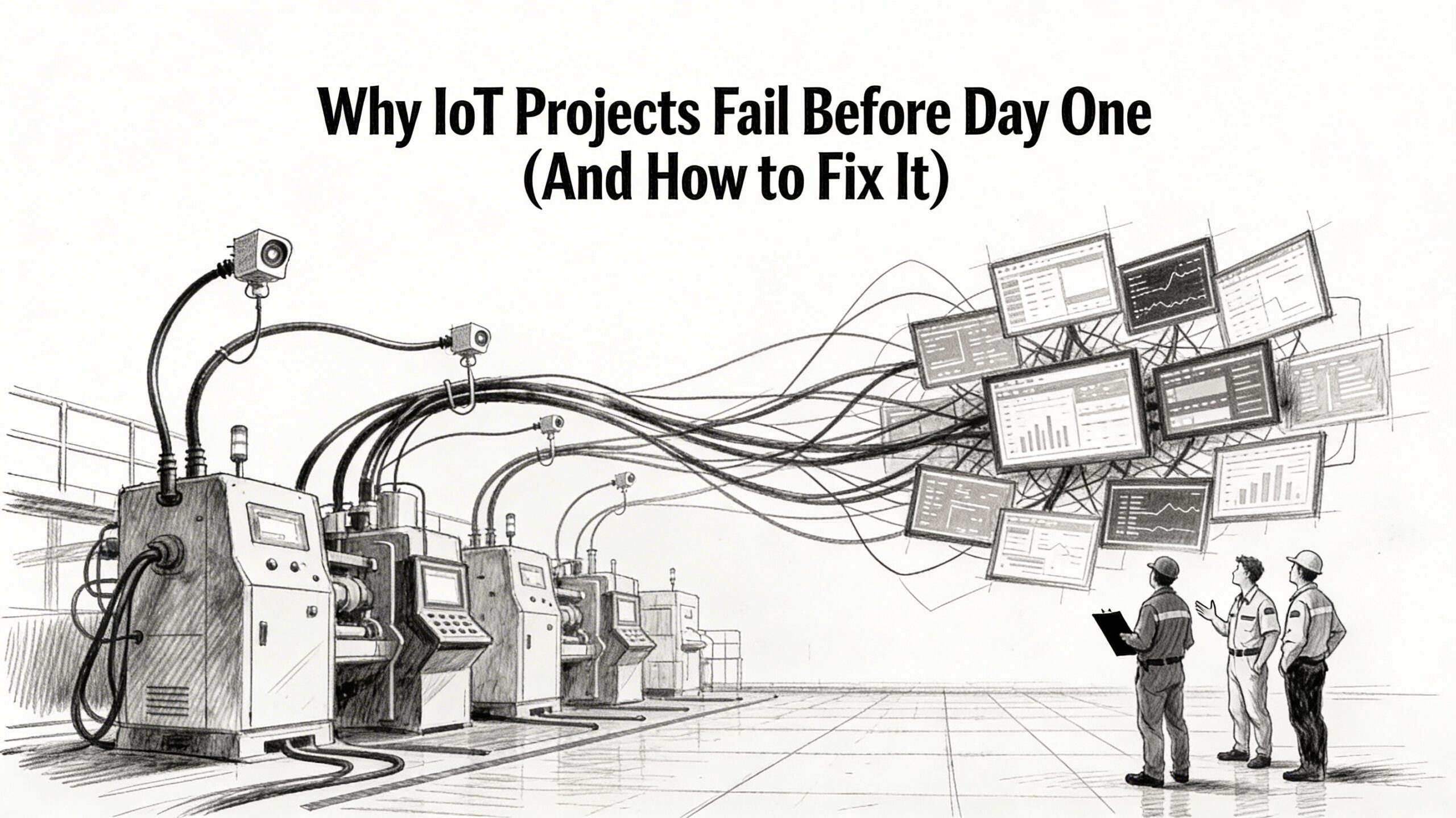
The Real Reason Why IoT Projects Fail
Step back and the pattern becomes obvious.
IoT project failure happens because companies treat these initiatives as technology projects.
But they’re not.
They shift how teams manage reliability. They change operational discipline. They require alignment across people, processes, and systems.
When teams build IoT around asset criticality, integrate it into existing workflows, support it with planners, involve technicians, and tie it to clear financial outcomes, it works.
When curiosity drives it alone, it slowly fades into the background.
Final Thoughts
The future of maintenance isn’t about installing more sensors. It’s about understanding why those sensors exist in the first place. Data matters, but leaders still need direct observation on the shop floor to fully understand operational reality.
It all comes down to clarity.
Clarity around what teams need to monitor, what truly matters, who needs to act, and how value is actually created.
Companies that get this right won’t just implement IoT. They’ll fundamentally change how they manage reliability.
And once reliability becomes predictable, performance follows naturally. Successful digital initiatives only work when they support a broader reliability transformation strategy inside the plant.
Technology can take you far, but only when strategy leads the way.