The Repair Was Never the Problem
Imagine a simple equipment failure. A sensor fails. A motor overload trips. A conveyor stops moving. None of these issues are particularly complicated. An experienced technician could diagnose and correct the problem relatively quickly. Yet somehow the downtime stretches from minutes into hours.
Why? Because nobody can immediately find the information they need. Situations like this highlight the difference between storing maintenance records and building true maintenance intelligence. Someone searches for drawings. Someone else looks for the spare part. A supervisor tries to locate maintenance history. An operator remembers that something similar happened years ago. Multiple phone calls are made. Several theories are discussed.
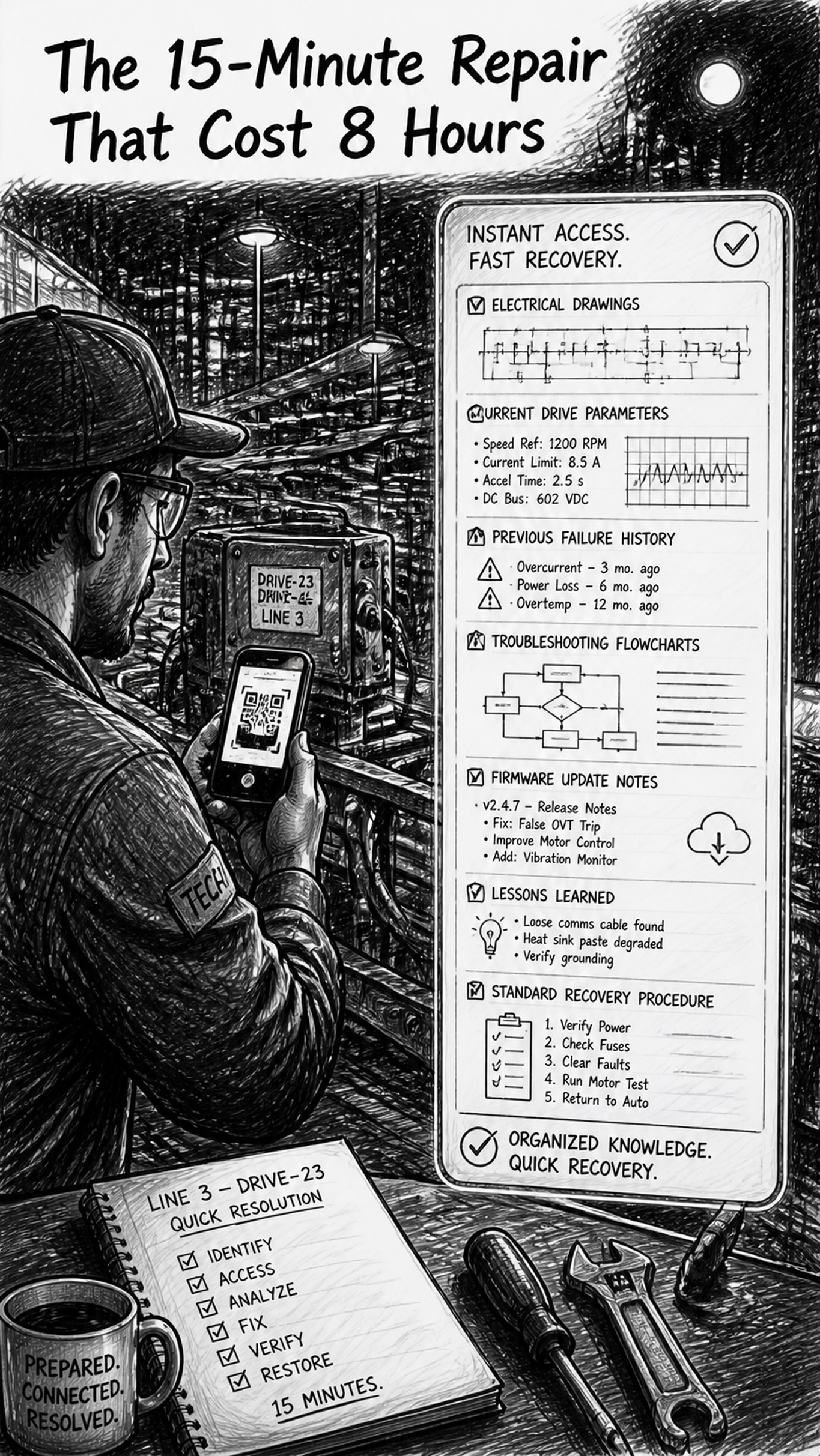
The repair itself only takes fifteen minutes. The real delay came from everything that happened before the wrench ever touched the machine, which is one of the most overlooked forms of waste in manufacturing. The organization spends the other seven hours and forty-five minutes searching, waiting, clarifying, and reacting.
That’s not a maintenance problem. That’s a system problem.
Every maintenance professional has a story like this
Every maintenance professional has experienced the impact of unexpected maintenance downtime.
A production line goes down unexpectedly. Operators call maintenance. Leaders start asking questions. The pressure builds quickly because every minute of downtime feels expensive.
Hours later, the equipment is finally running again.
Then someone discovers something frustrating. The actual repair only took fifteen minutes.
If that sounds familiar, you’re not alone. In many manufacturing plants, the biggest cost of a breakdown isn’t the repair itself. It’s everything that happens before the repair even begins.
Downtime Begins Long Before the Repair
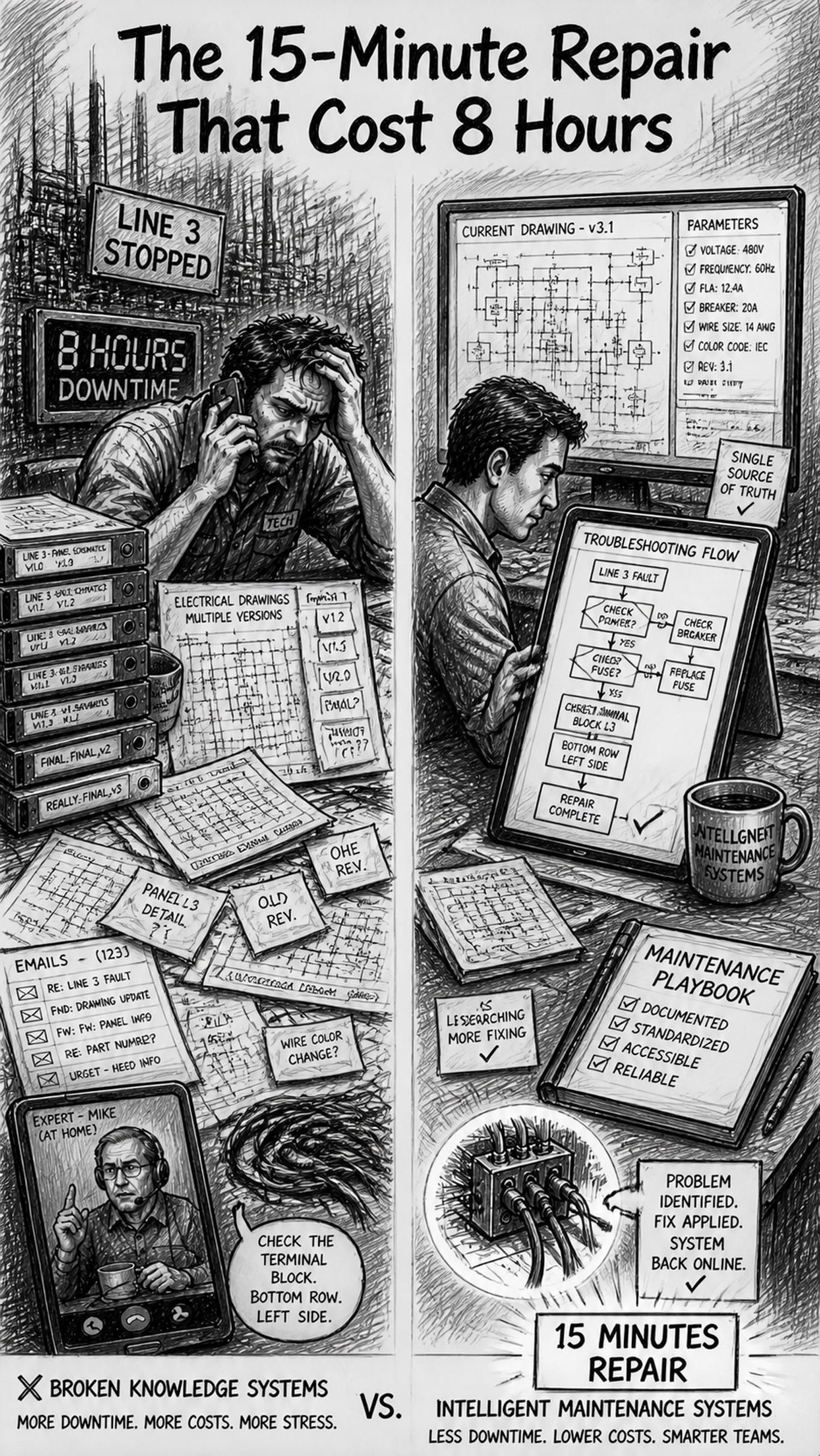
Most organizations calculate downtime from the moment production stops until the equipment starts running again. What they rarely measure is how much of that time is actually spent repairing equipment. In many cases, the repair is a surprisingly small portion of the total event.
The real delay comes from locating information, finding expertise, verifying parts, confirming procedures, and deciding what to do next. The repair crew may be fully capable of solving the issue, but they cannot act until the information catches up to them.
This is one of the reasons why searching for information has become such a significant source of hidden waste in manufacturing.
The wrench isn’t turning. The machine isn’t being repaired. The organization is simply waiting for answers. In many cases, maintenance downtime is driven more by delays in finding information than by the repair itself.
The Knowledge Exists, But It’s Hard to Reach
The frustrating part is that most organizations already possess the knowledge they need.
Someone has solved the problem before. Someone knows the failure pattern. Someone remembers the workaround. Someone understands the warning signs that appeared before the breakdown occurred.
The issue isn’t a lack of knowledge. The issue is accessibility. Strong Daily Management systems are designed to make those early warning signs visible before they become emergencies.
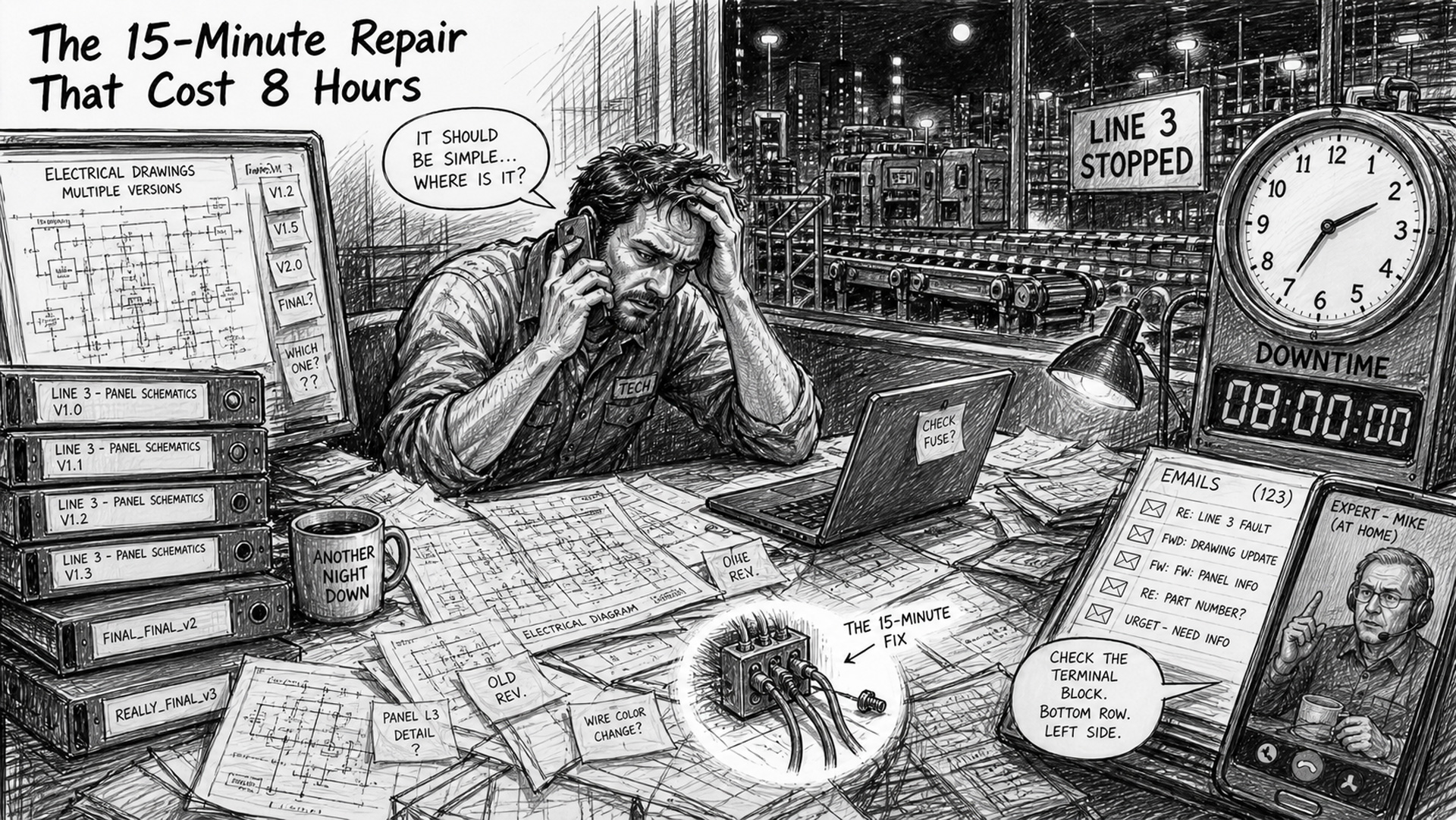
In many plants, valuable information is scattered across work orders, spreadsheets, manuals, emails, network drives, notebooks, and individual memories. When a failure occurs, people begin hunting for information instead of solving the problem.
That’s where the real cost starts to grow.
When Expertise Becomes a Bottleneck
Every plant has that person everyone calls during a difficult breakdown.
They’re experienced. They’re knowledgeable. They know the equipment inside and out. And that’s valuable. Until they’re unavailable.
When critical knowledge depends on a single individual, expertise becomes a bottleneck. The organization becomes dependent on finding the right person instead of accessing the right information.
The bigger question is simple: What happens when that expert retires, changes jobs, or simply isn’t available when the breakdown occurs? Many organizations don’t realize how vulnerable they are until they face that situation for the first time.
Small Delays Become Big Costs
One small delay rarely causes concern.
Five minutes here. Ten minutes there. A quick phone call. A short search through maintenance records.
Individually, none of those activities seem significant. Collectively, they create hours of lost production. This is why a fifteen-minute repair can easily become an eight-hour event.
Not because the repair was difficult. Because the organization created friction between knowledge and execution.
Reliability Is About More Than Repairs
When people think about reliability, they often think about equipment condition, preventive maintenance, predictive technologies, or spare parts management.
All of those matter. But reliability is also about information flow. Can technicians access the information they need quickly? Can they identify previous failures? Can they learn from past repairs? Can they find troubleshooting guidance without starting from zero?
The answers to those questions often determine whether a breakdown becomes a minor interruption or a major production loss. Unfortunately, many organizations begin troubleshooting only after production stops.
The Best Plants Reduce Friction
The strongest maintenance organizations understand that speed isn’t only about turning a wrench faster.
It’s about reducing friction.
They make information easy to find. They capture lessons learned. They document troubleshooting knowledge. They preserve expertise before it disappears. Most importantly, they make critical knowledge available at the moment people need it.
As a result, technicians spend less time searching and more time solving.
That’s where real performance gains begin.
A Different Way to Measure Downtime
Reducing maintenance downtime often starts with improving how knowledge and information flow through the organization. The next time your plant experiences a breakdown, try a simple exercise.
Don’t ask how long the repair took. Ask how long it took to find the answer. You may discover that the equipment wasn’t the biggest obstacle. The system was.
Because in manufacturing, downtime is rarely caused by a single failure.
More often, it’s caused by all the delays that surround it.
And sometimes, the difference between a fifteen-minute repair and an eight-hour outage is simply how quickly the right information reaches the right person.
If you enjoy practical discussions about maintenance, reliability, leadership, and operational excellence, connect with me on LinkedIn. I’d be happy to continue the conversation there.