Walk into almost any maintenance shop and you’ll notice something interesting.
The real value of the department isn’t sitting on a shelf in the storeroom. It isn’t in the toolboxes, the spare parts inventory, or even the equipment itself. The real value lives inside people’s heads. Every plant has that technician who just knows the machine. They’re the person who can hear an unusual sound from twenty feet away and already have a good idea of what’s happening. They remember that a similar failure occurred seven years ago on a night shift in the middle of winter. When production is down and nobody can figure out the problem, they’re usually the first person everyone calls.
That kind of knowledge is incredibly valuable. But it also creates a risk. What happens when that technician retires? What happens when they move to another facility? What happens when they’re simply not there at 2 a.m. during a major breakdown?
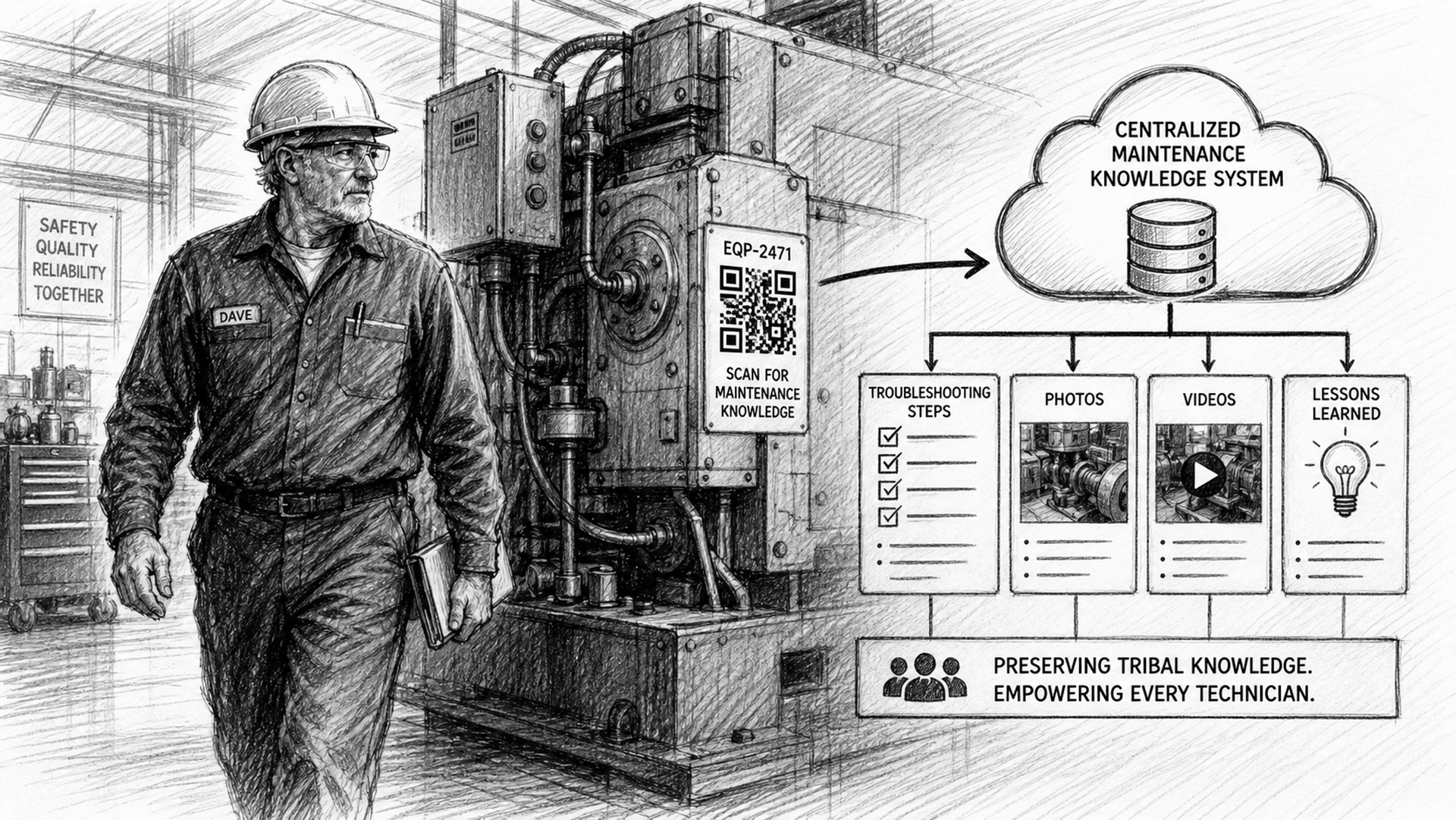
For many organizations, maintenance knowledge still lives primarily in conversations, notebooks, memories, and years of experience. We often call it “tribal knowledge.” While it can be incredibly powerful, it’s also fragile. Every time an experienced technician leaves, part of the plant’s operational intelligence leaves with them.
The Missing Piece in Digital Transformation
The manufacturing world talks constantly about digital transformation, predictive maintenance, artificial intelligence, and smart factories. Those technologies absolutely matter. But before a plant can become truly intelligent, it must first learn how to preserve and share human knowledge. That’s where a maintenance knowledge system can completely change the game.
Imagine a centralized platform built specifically for maintenance teams. Not another document repository full of PDFs that nobody opens. Not another folder buried somewhere on a network drive. Instead, imagine a living operational knowledge system. A place where technicians can instantly access troubleshooting methods, repair procedures, lessons learned, equipment history, photos, videos, setup instructions, and known failure patterns. Most importantly, imagine a system built not only around what failed, but around how to fix it. That distinction matters.
Many systems today do a reasonable job of recording failures. Very few truly teach execution. Very few capture the practical side of maintenance craftsmanship, the real-world knowledge that helps someone perform a repair safely, effectively, and consistently.
Turning Experience Into Action
This is where the philosophy behind the Square Method becomes especially valuable. The goal isn’t simply to document information. The goal is to create practical guidance that helps tradespeople execute repairs successfully.
Think about a technician standing in front of a failed packaging line. Without a knowledge system, they might spend forty minutes flipping through old binders, searching through maintenance records, or making multiple phone calls to find someone who has seen the problem before.
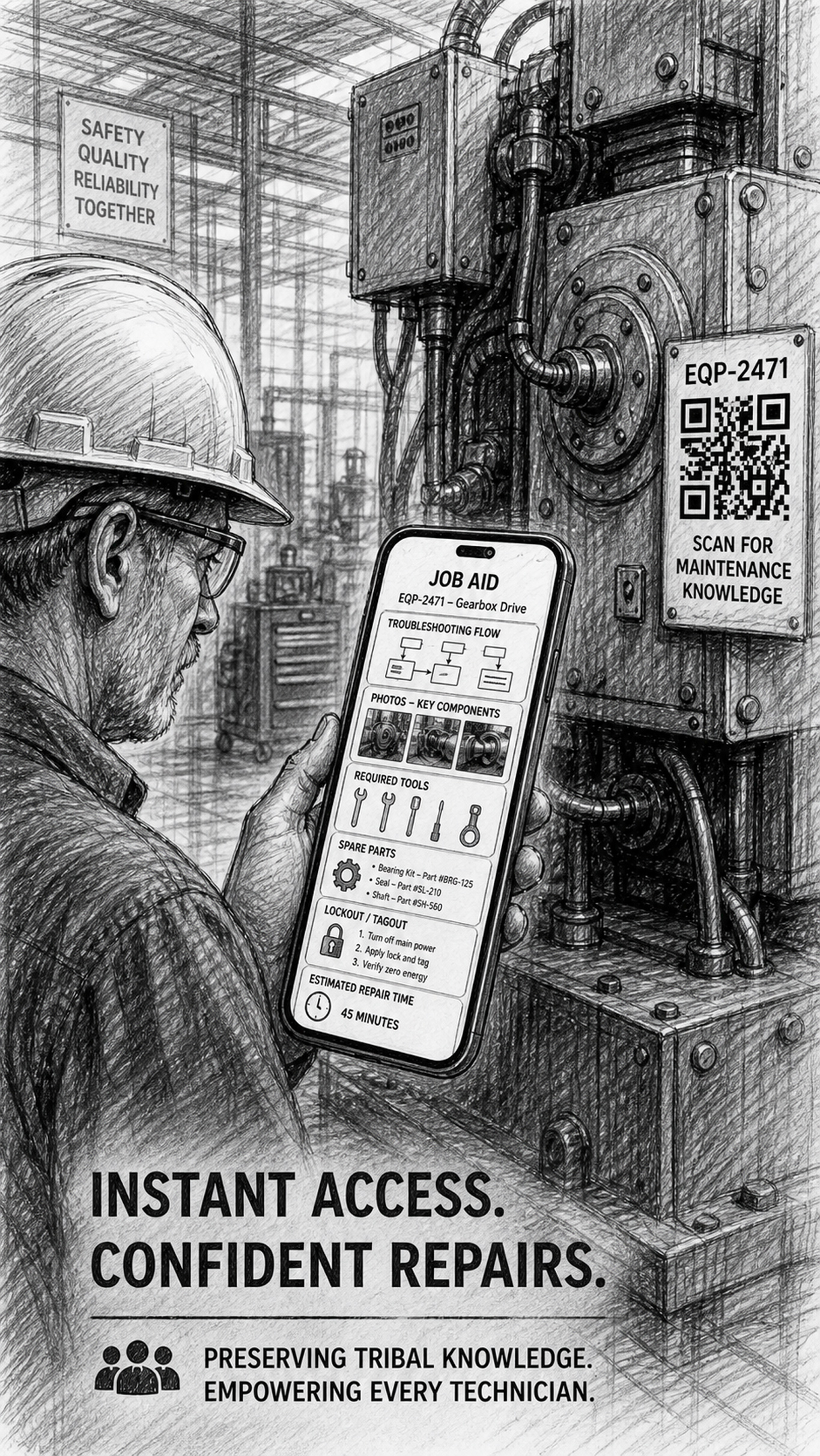
Now imagine a different scenario. The technician scans a QR code or searches the asset number. Within seconds, they have access to common failure modes, troubleshooting steps, photos of critical components, repair videos, required tools, spare parts information, lockout procedures, estimated repair times, and lessons learned from previous repairs. They’re no longer troubleshooting alone. They’re being supported by the collective experience of the entire maintenance organization.
In many ways, the system becomes the maintenance department’s internal Google, a searchable intelligence platform built by technicians, for technicians.
Why Consistency Matters
xAnother major benefit is consistency. When every technician approaches repairs differently, troubleshooting takes longer. Repeat failures become more common. Equipment reliability suffers.
Standardized knowledge creates standardized execution. When best practices are documented and shared, maintenance becomes more predictable, efficient, and reliable. Downtime decreases not only because repairs happen faster, but because repairs are performed better. This is also closely connected to Lean thinking.
Every hour spent searching for information is waste. Every repeat failure caused by poor knowledge transfer is waste. Every unnecessary troubleshooting step is waste. Knowledge accessibility isn’t just a training issue. It’s an operational excellence issue. Like strong Daily Management, a maintenance knowledge system makes critical information visible when people need it most.
Closing the Experience Gap
One of the biggest challenges facing industry today is the growing experience gap. Many senior tradespeople are approaching retirement while newer technicians are entering increasingly complex manufacturing environments. Traditional apprenticeship programs remain important, but by themselves they’re often not enough to transfer knowledge quickly enough.
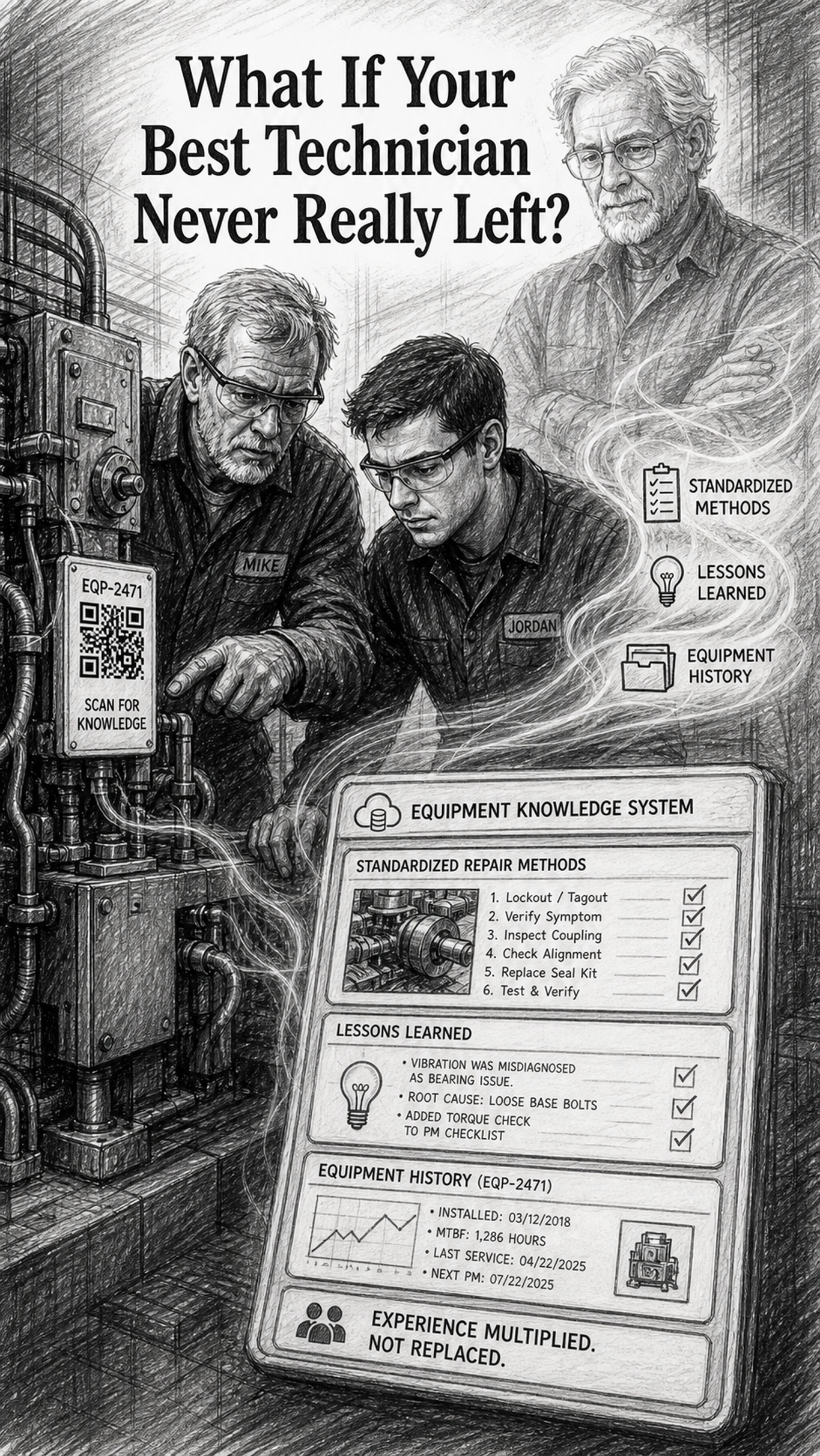
A structured maintenance knowledge system can dramatically accelerate learning. Instead of relying entirely on observation and trial-and-error, technicians gain access to guided troubleshooting, visual examples, standardized repair methods, and real equipment history.
Learning becomes continuous and available whenever it’s needed. Nothing replaces experience. But a knowledge system can multiply it. It allows the expertise of one highly experienced technician to support an entire generation of future technicians.
More Than an IT Project
Perhaps the most important aspect of a maintenance knowledge system has nothing to do with technology. It’s cultural. Building a maintenance knowledge system isn’t an IT project. It’s a leadership project. Just as Leader Standard Work creates consistency in leadership behaviours, a maintenance knowledge system creates consistency in troubleshooting and repairs. It requires creating an environment where people understand that sharing knowledge doesn’t reduce their value. It increases the value of the entire organization.
The strongest maintenance teams aren’t the ones where a single person knows everything. They’re the teams where knowledge flows freely, continuously, and systematically. Experienced technicians shouldn’t feel like their expertise is being extracted from them. They should feel like their experience is being preserved as part of the plant’s legacy.
Their knowledge becomes a foundation for future generations.
The Future of Maintenance Is Human Knowledge
Some technicians carry thirty years of machine behaviour, failure patterns, troubleshooting methods, and practical wisdom in their minds. Many of these insights are discovered during Gemba, where leaders and technicians observe equipment and processes in their actual operating conditions. They’re walking libraries of operational knowledge. Capturing that experience before it disappears may be one of the most important responsibilities modern maintenance leaders have. Organizations that use Hoshin Kanri effectively often identify knowledge retention and workforce capability as strategic priorities rather than isolated initiatives.
The future of maintenance isn’t only about sensors, automation, predictive analytics, or artificial intelligence. It’s also about making human expertise accessible, repeatable, scalable, and available at the exact moment it’s needed. Because when the right information reaches the right technician at the right time, maintenance stops being reactive.
It starts becoming intelligent.
If you enjoy practical discussions about maintenance leadership, feel free to follow me on LinkedIn